Finding Everyday Purpose Through Japanese Wisdom
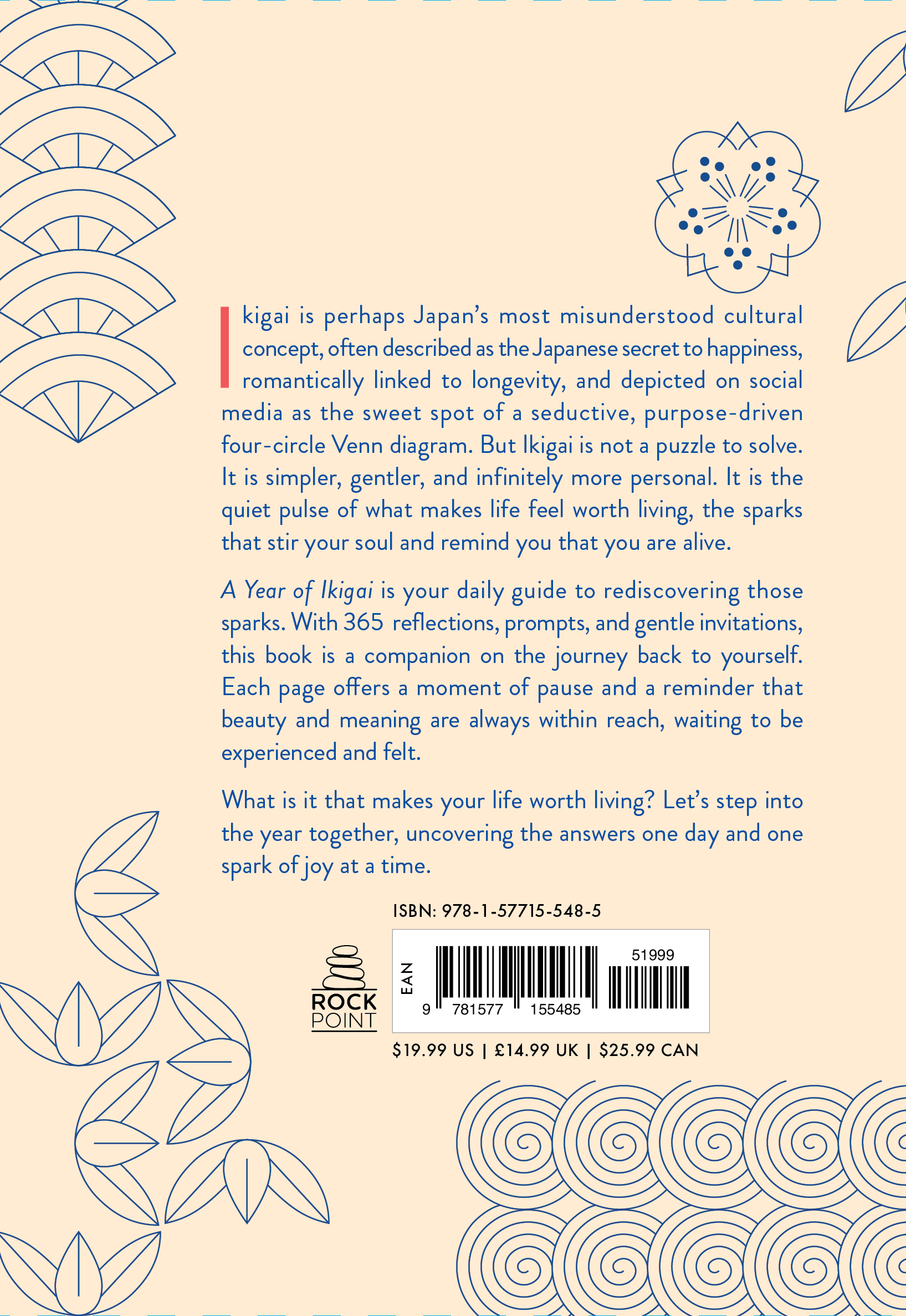
Find purpose and meaning in your day-to-day life with A Year of Ikigai, a collection daily reads, over 365 days, for easy understanding and integration of this Japanese philosophy.
In A Year of Ikigai, ikigai expert Nicholas Kemp introduces the Japanese concept of ikigai through 365 days of practical tips, reflections, and real-life examples to help you apply the principles of ikigai in tangible ways to your life, so you can answer the most important question:What gets you up in the morning?
Introduction
The fact that you’re alive to read these words is nothing short of a miracle. Thousands upon thousands of generations in your ancestral chain all lived long enough, met, and procreated at the exact right time to eventually produce you. In short, you and I won the jackpot in the evolutionary lottery. Yet, we don’t treat life as a miracle. Most of the time, we struggle to get through each day. The Japanese concept of ikigai reminds us that life is a miracle—a patchwork of small wonders and special moments, once-in-a-lifetime experiences and life-changing opportunities we can embrace, nurture, and appreciate if we choose to do so. In short, having ikigai makes life feel worth living.
For close to a decade, the West has had a fascination with ikigai, believing that it is a concept from Okinawa, the secret to living a long and happy life, and a sweet spot where you find your dream job or bliss in life. Best-selling books, numerous TED Talks, thousands of blog articles, and endless social media posts perpetuate and continue to promote false notions of what ikigai is and what motivates Japanese people to get out of bed in the morning.
Unfortunately, many common Western thoughts are nothing more than romanticized interpretations that have misled millions of people into believing that ikigai originates from a “blue zone,” a part of the world that has a high concentration of centenarians. Another false interpretation is that ikigai must be something you love, are good at, that serves the world, and can be paid for in order for you to experience it.
The truth is, ikigai encompasses all aspects of one’s life with an emphasis on the intrinsic elements that provide a sense of meaning and fulfilment. Ikigai includes life-affirming facets we might relate to positive psychology such as life satisfaction, growth, hope, social affiliation, freedom, self-actualization, meaning, and purpose.
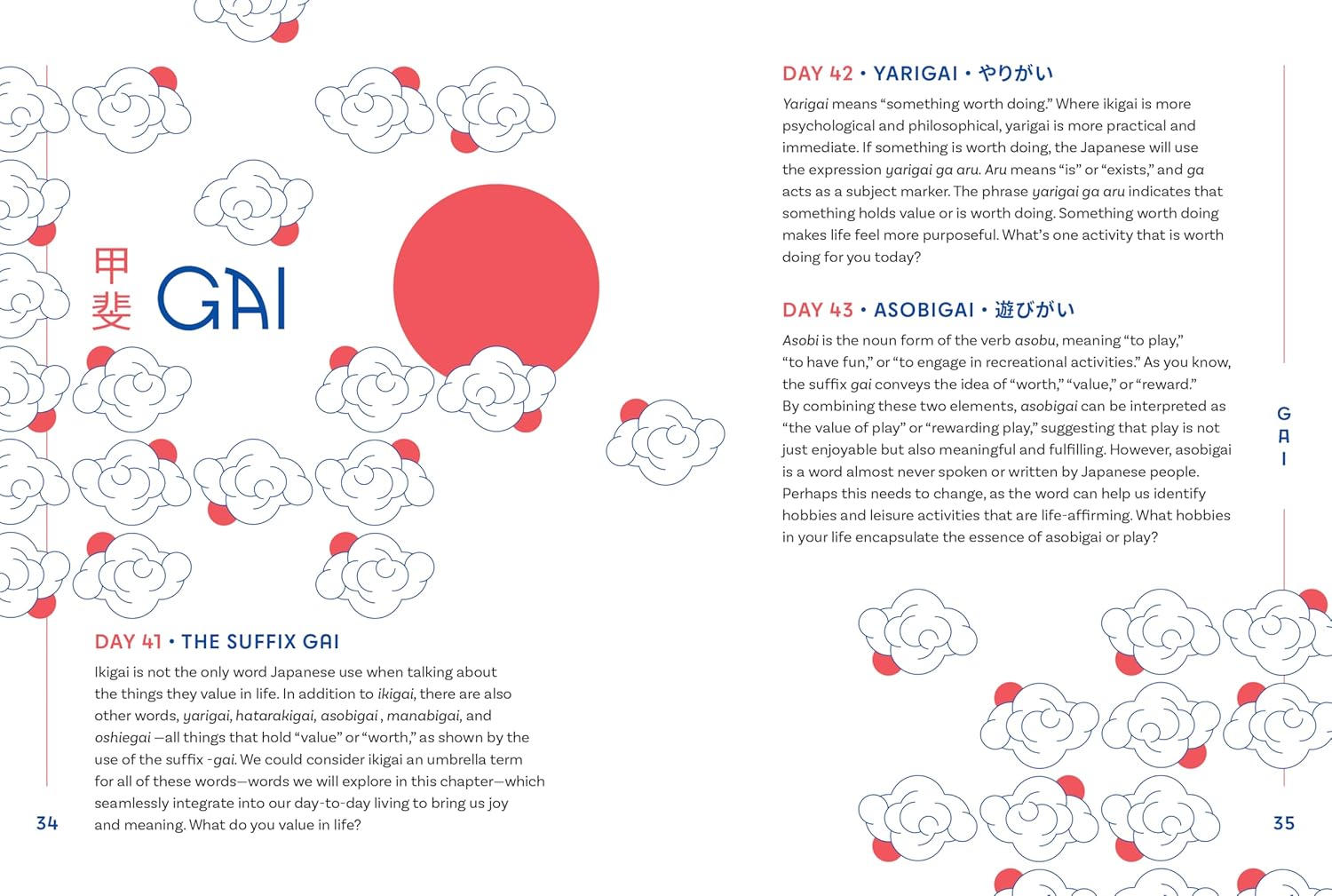
A closer look at the word—and its kanji, 生き甲斐—helps us understand ikigai’s meaning and application. Ikigai is a compound of two terms: iki(from the verb <I>ikiru<$> 生きる), meaning “to live,” and gai,(甲斐), meaning “value” or “worth.” In a nutshell, ikigai is what you live for—what makes your existence meaningful.
If we take a closer look at the kanji of the suffix kai, (甲斐), it leads us to a deeper level of understanding. The first character, 甲, means “armor” or “shell,” suggesting that ikigai includes the things that protect you or help you cope with life. The second character, 斐, indicates something “beautiful” and “patterned,” much like how life is a tapestry. Together, these two kanji suggest that ikigai encompasses both the things that help you endure life’s challenges and enjoy the beautiful moments, and experiences that make life feel worth living.
Here, it is crucial to understand what we mean by “life.” We are not referring to your life in the broad, existential sense—ikigai is rooted in daily existence, in the small, meaningful moments that shape everyday life. Ikigai is not made of grand plans or embracing an all-or-nothing attitude. Ikigai is what you make of everyday life.