
How much can we truly hold?
In this episode of the Ikigai Podcast, Nick speaks with Shigeki Nishimura about utsuwa, a concept that encourages us to focus less on doing more and more on expanding our inner capacity in work, leadership, and life.
Podcast Highlights
- From corporate engineer to global leadership thinker. Shigeki shares his life in Germany.
- What is utsuwa?. Shigeki explains what utsuwa is.
- Ikigai, kintsugi, and the missing third element. Shigeki explains the connection between Japanese concepts such as ikigai, kintsugi, and utsuwa.
- Why emptiness is not weakness. Shigeki explains how an empty space has a function.
- The three pillars of utsuwa. Shigeki shares the three pillars of utsuwa.
- Four diagnostic questions. Shigeki shares a diagnostic to measure one’s utsuwa
- The spacious leader. Shigeki explains how utsuwa philosophy helps guide leaders.
- Expanding your utsuwa. Shigeki discusses how we can embrace and expand the concept of utsuwa in our lives.
Shigeki Nishimura
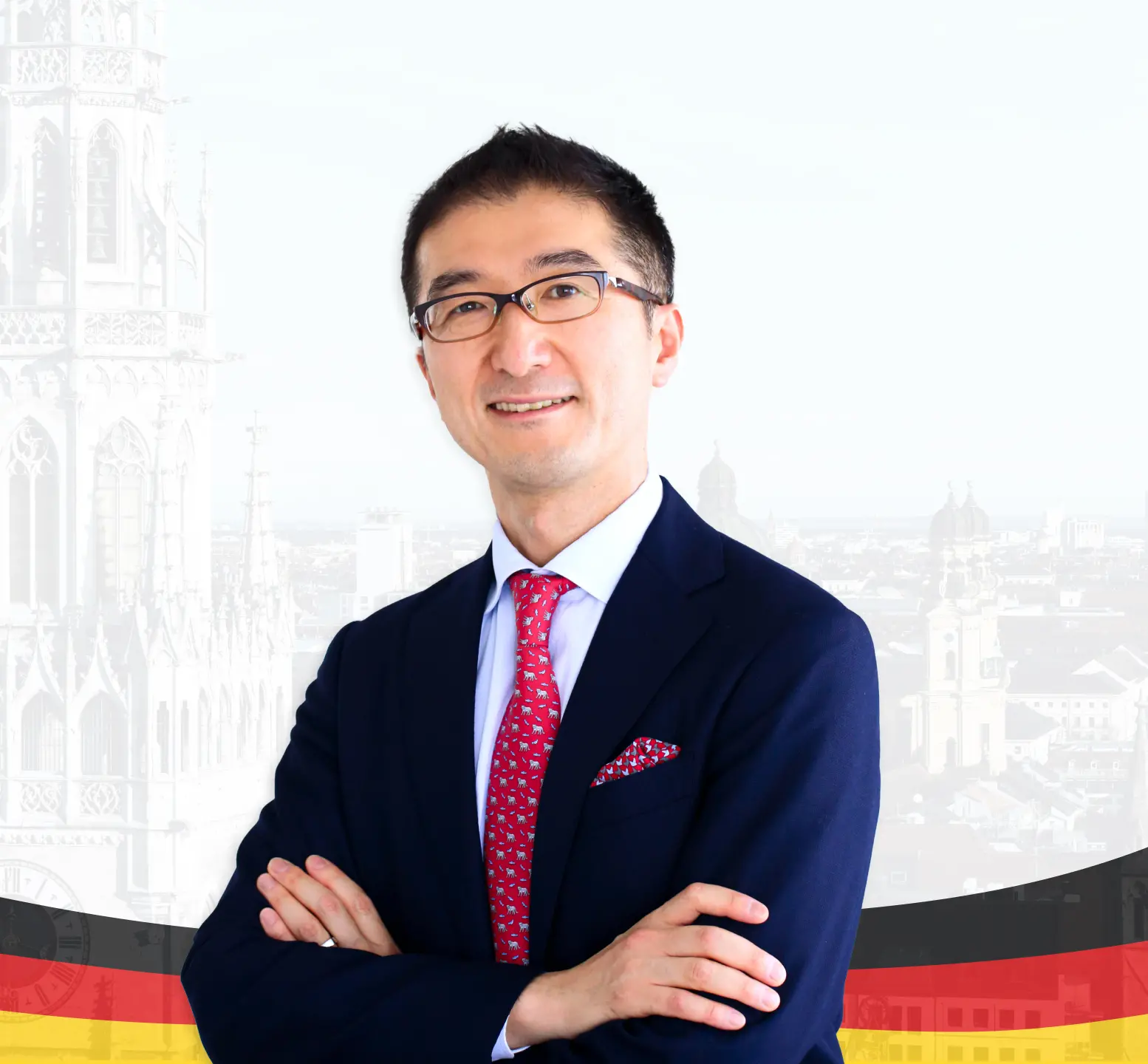
Shigeki Nishimura is an author and global leadership thinker with many years of experience working between Japanese and German work cultures. He has over 30 years of experience in the semiconductor industry and more than 10 years in the automotive industry.
During this time, he led multicultural teams in high-pressure environments and helped connect Japanese headquarters with European offices, bridging very different ways of working.
From Corporate Engineer to Global Leadership Thinker
Shigeki spent over 30 years navigating high-pressure environments across Japan and Europe, including nearly two decades living in Germany. Working at the intersection of Japanese precision and German efficiency, he learned firsthand that productivity is not about working longer, but about working better.
His insights gained international attention when Germany’s leading weekly newspaper Die Zeit featured his work with a headline that roughly translated to: “Nishimura teaches his compatriots what they can learn from the Germans: work less, achieve more.”
After stepping away from corporate life, Shigeki now works as an independent consultant, traveling globally and teaching leaders how to expand their inner capacity rather than simply adding more responsibilities.
What Is Utsuwa?
Utsuwa literally means “vessel.” In Japanese culture, it often refers to handcrafted ceramic bowls used in tea ceremonies—objects valued not for perfection, but for warmth, weight, and presence.
For Shigeki, utsuwa is a metaphor for the human being.
A handcrafted vessel is stable, grounded, and intentionally spacious. Even when it holds something, like tea, it is never filled to the brim. There is always yohaku: margin, emptiness, breathing room. That space is not wasted; it is essential.
Applied to life, utsuwa represents our inner capacity, the emotional, mental, and spiritual space we need to remain resilient, creative, and human.
Ikigai, Kintsugi, and the Missing Third Element
Shigeki places Utsuwa alongside two well-known Japanese concepts: ikigai and kintsugi.
He explains this through a metaphor from the automotive world. Ikigai is the engine, the source of motivation and purpose that drives us forward. Kintsugi, the art of repairing broken pottery with gold, is the mechanic, the process of healing and growing stronger through adversity.
Utsuwa, however, is the frame or chassis. It determines how much we can hold, how much pressure we can bear, and how stable we remain under stress. Without sufficient utsuwa, even strong motivation leads to burnout, and even beautiful repairs cannot prevent collapse.Why Emptiness Is Not Weakness
“If you have yohaku , extra space, you have time to think nothing. And suddenly, a new idea comes.” - Shigeki Nishimura
Modern life encourages us to fill every moment; calendars packed, inboxes overflowing, minds constantly stimulated. Shigeki argues that this is precisely why so many people feel overwhelmed.
In Japanese culture, moments of doing nothing—quietly watching the sky or sitting without distraction—are not laziness. They are fertile ground for insight. Innovation, clarity, and wisdom emerge not when the mind is full, but when it is spacious.
Without yohaku, there is no room for new ideas, deeper relationships, or self-awareness.
The Three Pillars of Utsuwa
Shigeki describes utsuwa as resting on three essential pillars.
The first is groundedness. Like a heavy earthen bowl, a person must be emotionally stable, even in chaos. Grounding practices: reflection, presence, routine, create resilience.
The second is capacity. Our utsuwa must match our mission. If we wish to have greater influence or responsibility, we must intentionally grow our capacity, not just our ambition.
The third is the void. No matter how large the vessel becomes, it should never be completely filled. Space allows learning, adaptability, and creativity.
“So if we do decide to have a life mission, we must also have the capacity to pursue it.” - Nicholas Kemp
Four Diagnostic Questions
To measure your own utsuwa, Nishimura poses four reflective questions:
- Can you hold success without becoming arrogant?
- Can you hold failure without shattering?
- Can you hold others’ immaturity without harsh judgment?
- Can you sit with loneliness and uncertainty without panic?
Leadership, he argues, requires the ability to contain contradictions—strength and humility, clarity and doubt, action and stillness.
The Spacious Leader
Shigeki extends utsuwa into leadership philosophy. Rather than the traditional image of a dominant, controlling leader, he advocates for what he calls spacious leadership.
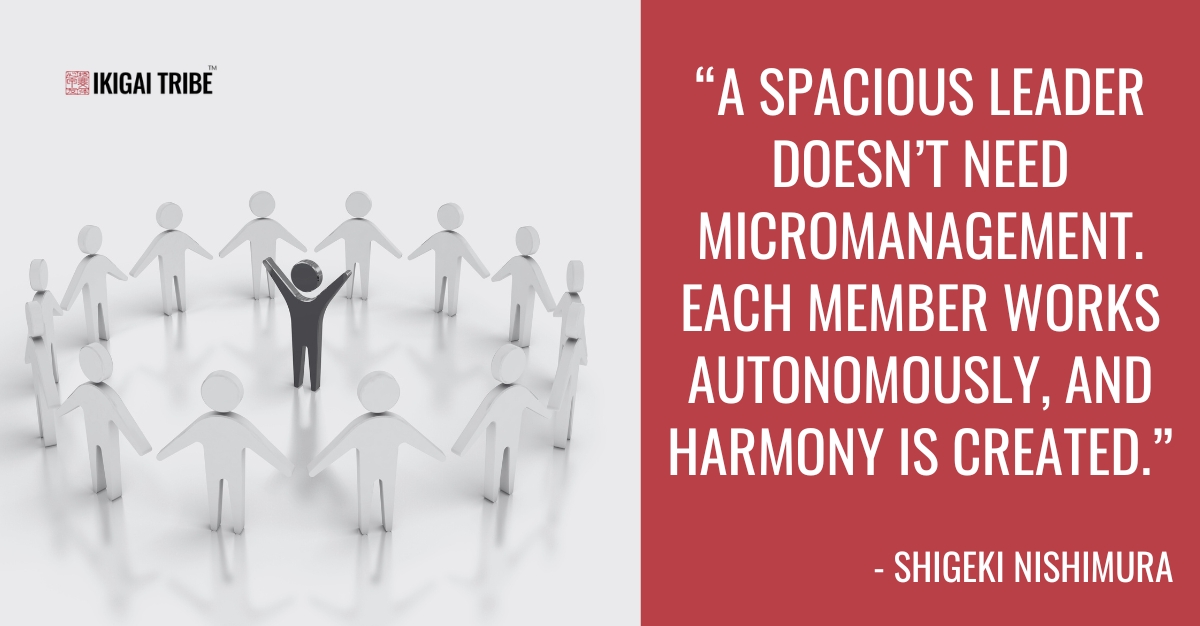
“A spacious leader doesn’t need micromanagement. Each member works autonomously, and harmony is created.” - Shigeki Nishimura
A spacious leader holds contradictions. They can be decisive in crisis yet gentle in growth. They create room for others to think, speak, and take ownership. Instead of micromanaging, they cultivate autonomy and harmony within the team.
Such leaders do not demand constant output, they provide containers in which people can thrive.
Expanding Your Utsuwa
Nishimura offers three simple practices:
- Accept the cracks - Imperfection is not weakness. Acknowledging flaws makes you human—and trustworthy.
- Lower the center - When anxious, ground yourself. Stability begins physically and emotionally.
- Clear the space - Schedule emptiness, practice meditation, journal, have meaningful one-on-one conversations. Guard your cognitive “memory space” like you would your computer’s hardware.
More apps do not improve performance if memory is full. Likewise, more achievements do not expand you if your container remains small.
Conclusion
The world does not need more information, louder voices, or faster decisions. It needs people who can contain complexity without breaking.
By expanding our utsuwa, accepting imperfections, lowering our center of gravity, and practicing emptiness, we become steadier, wiser, and more humane.
Sometimes, growth is not about adding more.