
Learning Japanese for work is rarely a straight line from grammar to fluency.
The biggest gap for many professionals is not vocabulary, but the cultural logic behind Japanese communication: indirectness, shared context, and a constant awareness of how words land on other people.
Podcast Highlights
- Shohei’s background across Japan, Malaysia, and the UK
- Why language learning becomes ikigai through access to new people and ideas
- Why many learners feel confident in casual Japanese but struggle in busienss contexts
- How indirectness, silence, and shared context shape Japanese workplace communication
- Why keigo is less about hierarchy and more about respect, humility, and role awareness
- How trust is built through introductions, omiyage, and in-person relationship-building
- Why cultural understanding matters just as much as grammar for business Japanese success
Shohei Yoshida

Shohei Yoshida is a Business Japanese communication coach and founder of BizNihongo, where he helps global professionals communicate confidently in Japanese meetings, emails, and client conversations.
His work focuses on keigo, workplace etiquette, and the cultural nuances that build trust, credibility, and stronger relationships in Japanese business environments.
Through his coaching, Shohei supports professionals who want to move beyond textbook fluency and communicate naturally in real workplace contexts. His work focuses on helping learners understand not only what to say, but how language, hierarchy, and relationship dynamics shape credibility and connection in Japan’s business culture.
In this conversation with Shohei Yoshida, founder of Biz-Nihongo, we explore why business Japanese, Japanese workplace communication, and Japanese business culture are inseparable. The language itself encodes hierarchy, politeness, and group harmony.
Once you understand that, the “mystery” of Japanese starts to feel learnable rather than intimidating, and language becomes a tool for connection instead of a constant test.
Language Is More Than Words
Many people approach Japanese as a technical skill built on grammar, sentence patterns, and memorised vocabulary. But this only scratches the surface of what is really happening in communication. In Japan, meaning is often shaped by context, relationship, and what is intentionally left unsaid.
For Shohei, learning and teaching language is deeply tied to purpose and connection. His experience across Japan, Malaysia, Singapore, and the UK shows how language shapes the way people think, collaborate, and build trust. English often pushes speakers toward clarity and explicit ownership, while Japanese places greater weight on context, harmony, and role awareness.
“Learning a language gives you access to people, cultures, and ideas that were previously out of reach. It’s not just about words, but about being able to connect with people from different countries and learn how they see the world.” - Shohei Yoshida
The Cultural Logic Behind Indirect Communication
A major theme in our conversation is how English and Japanese encourage different communication habits. English tends to require explicit subjects and clear ownership: I think, we decided, you should. Japanese often omits the subject entirely, leaning on shared understanding and situational cues.
To outsiders, this can feel vague or even stressful, particularly in workplaces where roles and expectations are not directly stated. Shohei links this to Japan’s collective roots and the expectation that people infer what the group needs. This subtle communication style reflects mutual awareness rather than a lack of clarity.
We also discuss “cushion phrases,” the softening language often used before requests, refusals, or feedback. These expressions are not unnecessary politeness. They serve an important relational function by protecting trust and preserving respect.
The Meaning of Silence
Silence plays a much more active role in Japanese communication than in many Western settings. Rather than signalling awkwardness, silence can communicate thoughtfulness, respect, emotional awareness, or even comfort. This includes the kind of “comfortable silence” that does not need to be filled.
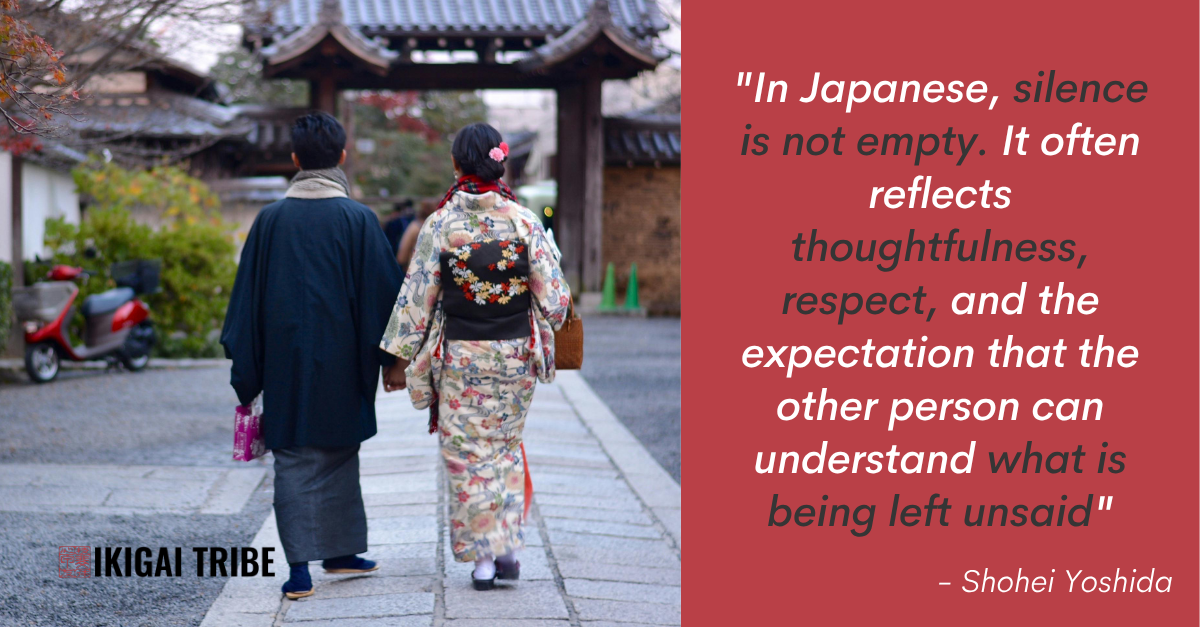
"In Japanese, silence is not empty. It often reflects thoughtfulness, respect, and the expectation that the other person can understand what is being left unsaid." - Shohei Yoshida
Even refusal often appears through silence or soft phrasing. A simple chotto… followed by a pause can communicate “no” without direct confrontation. For learners, mastering silence, pacing, and the ability to “read the air” becomes just as important as verb conjugation.
Casual Japanese vs Business Japanese
A practical challenge many professionals face is the split between casual Japanese and formal Japanese. Learners often become fluent in friendships and everyday conversation, only to discover that meetings, presentations, and client settings require a different rhythm entirely. Suddenly, keigo, formal set expressions, and email etiquette become essential.
Shohei explains that while keigo historically reflected hierarchy, today it functions more as a system of respect and humility. This can confuse learners in modern workplaces that outwardly appear flat or “equal.” Even native speakers misuse it, which is why real-world coaching often matters more than textbook perfection.
Another important insight is flexibility. Japanese offers multiple ways to say “I,” multiple levels of politeness, and multiple greetings depending on context. What is “correct” depends less on fixed rules and more on the relationship, the environment, and the impression you want to create.
Context, Flexibility, and Cultural Competence
Fluency in Japanese requires more than correct grammar. It also requires sensitivity to hierarchy, timing, group dynamics, and the emotional weight of language choices. Expressions such as natsukashii or even everyday greetings carry meaning that depends heavily on context.
This is why cultural competence matters so deeply. The same phrase can feel respectful, warm, too casual, or even inappropriate depending on who says it and when. Developing this awareness helps learners move from transactional communication to truly natural interaction.
Japanese is also highly flexible in how it allows speakers to shape identity and tone. Choices around pronouns, requests, and politeness create subtle signals of closeness, professionalism, and role awareness. For professionals, this flexibility becomes a powerful tool once understood.
Relationship-Building in the Japanese Workplace
The episode also highlights that succeeding in Japan is rarely just about language ability. Whether you work inside a Japanese company or are building a startup in Japan, introductions, referrals, and trust often matter more than cold outreach. Relationships open doors that language alone cannot.
Shohei and Nick discuss omiyage, visiting in person, and the in-group/out-group boundary that shapes networking, invitations, and client rapport. Underneath this is a deeper truth: many people continue learning Japanese not simply for career advancement, but because they genuinely want meaningful connection with Japan and its people.
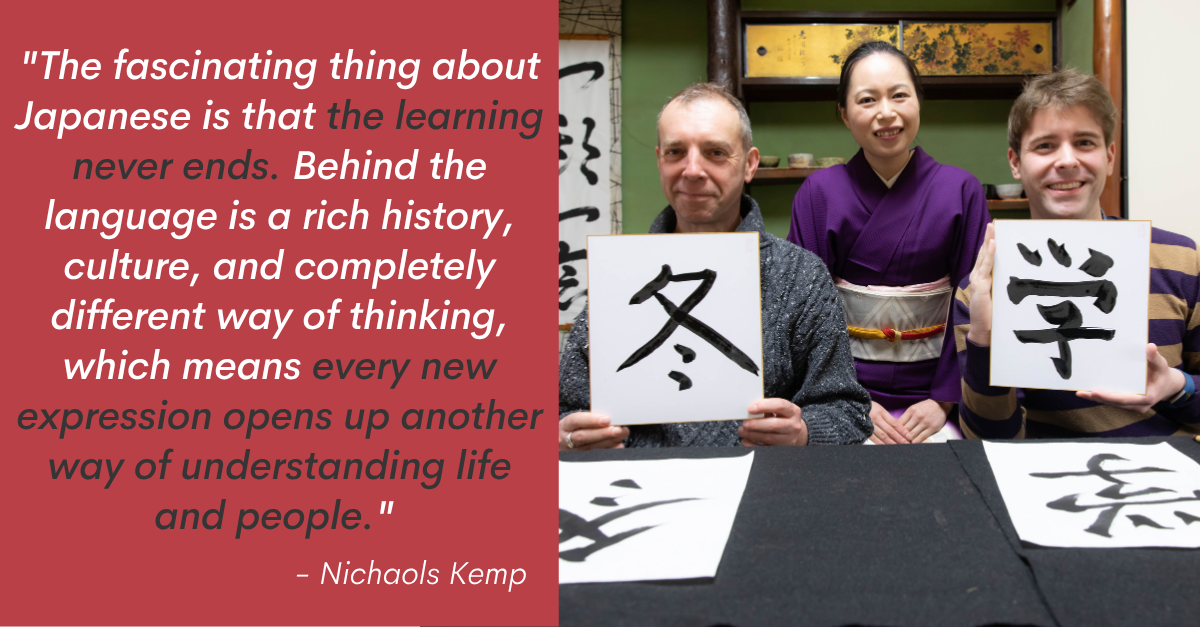
“The fascinating thing about Japanese is that the learning never ends. Behind the language is a rich history, culture, and completely different way of thinking, which means every new expression opens up another way of understanding life and people.” - Nicholas Kemp
Learning as Connection, Not Just Competence
Shohei frames teaching as ikigai and even oshigai because it allows him to learn from global professionals while helping them gain confidence in the Japanese workplace. His work goes beyond language correction. It helps learners feel capable, credible, and culturally attuned.
If you want practical business Japanese, stronger Japanese email etiquette, and smoother cross-cultural communication, the path is clear. Learn the culture through the language, not separate from it.