
What happens when people grow older and lose the roles that once made them feel needed? For Yuki Ohata, this question is deeply personal. After seeing his grandmother lose her energy when she stopped farming—and later witnessing elderly farmers flourish through their work in the mountains of Tokushima—he came to believe that life needs a role.
In this episode, Yuki shares how he is using agriculture to create ibasho in Shizuoka: communities where older adults can continue working, earning an income, contributing and experiencing a sense of belonging and ikigai.
“I want to create a society where everyone can look forward to growing old through agriculture.” - Yuki Ohata
Timothy Connor
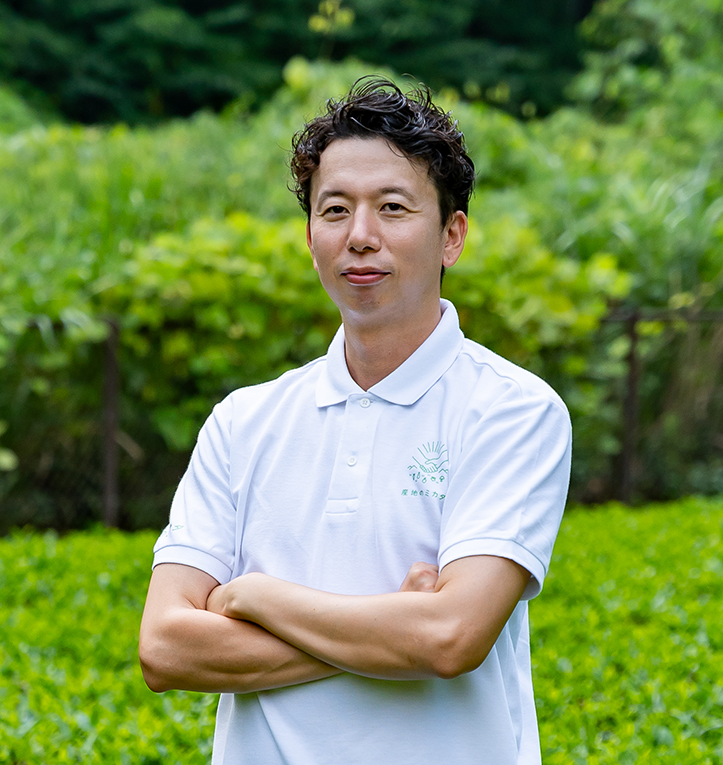
Yūki Ōhata is the Representative Director of Sanchi no Mikata, a company that supports farmers and producers by connecting their agricultural products with markets, restaurants and consumers.
Through his network of approximately 8,000 farmers on Instagram, he is helping producers earn more while creating opportunities for older adults and rural communities to flourish.
Things moved quickly for Yuki and me.
We connected after I stumbled upon one of his LinkedIn posts in which he related the phrase “Life needs a role” to ikigai. His words resonated with me, so I left a comment. Yuki replied, I sent him a direct message, and he accepted my connection request.
When I shared that I would be in Tokyo in May and June, Yuki suggested that we meet. I invited him to my Tokyo masterclass, which he attended. The following day, he invited me to lunch with his friend Satoshi to discuss how we might work together.
That exchange of comments, questions and conversations has led to this podcast episode.
Ikigai as a Way of Living
Although Yuki had worked with ikigai for many years, he explained that the Tokyo Masterclass helped him see it differently.
“I had been working with ikigai as a business. In your masterclass, I saw it as a way of living.”
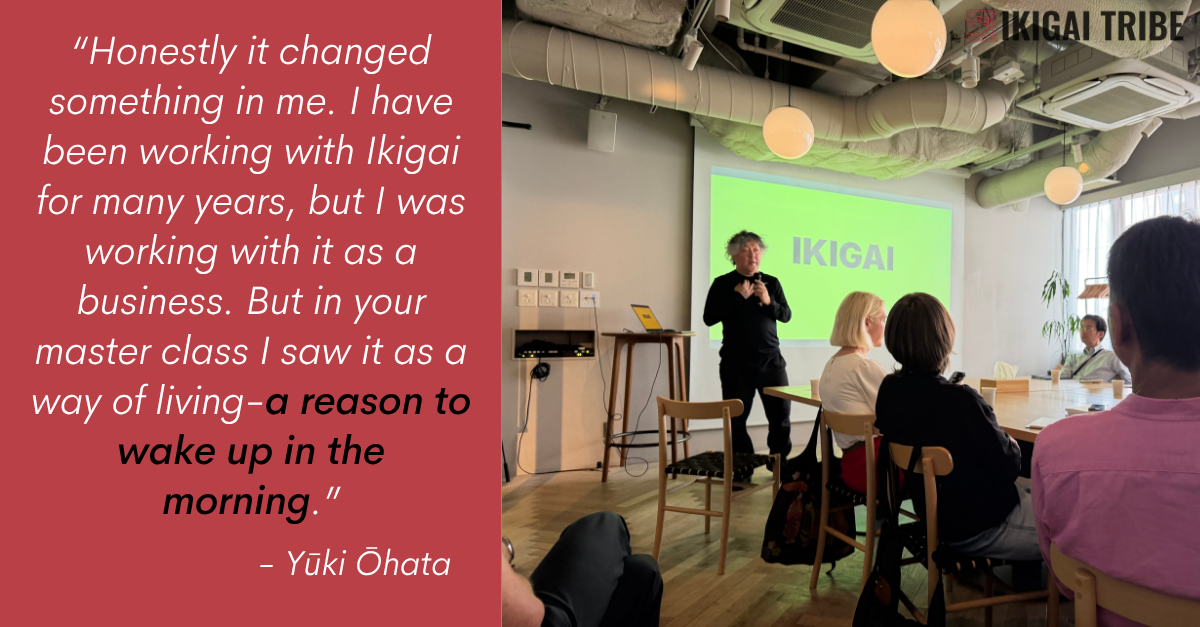
He was particularly struck by the diversity of the participants. People from different countries and cultural backgrounds spoke about needing a reason to get up in the morning—the same need Yuki had witnessed among older adults in the mountain communities of Tokushima.
The languages and life circumstances were different, but the underlying feeling was the same.
Yuki also appreciated that the masterclass did not prescribe an answer. Instead, it invited participants to reflect through questions.
As he observed, people in Japan often wait for the correct answer. Being encouraged to think for himself felt refreshing.
The Grandmothers Who Harvest Leaves
Yuki was born in Shizuoka and now lives in Shizuoka City, but he describes the mountains of Tokushima as the place where his real education took place.
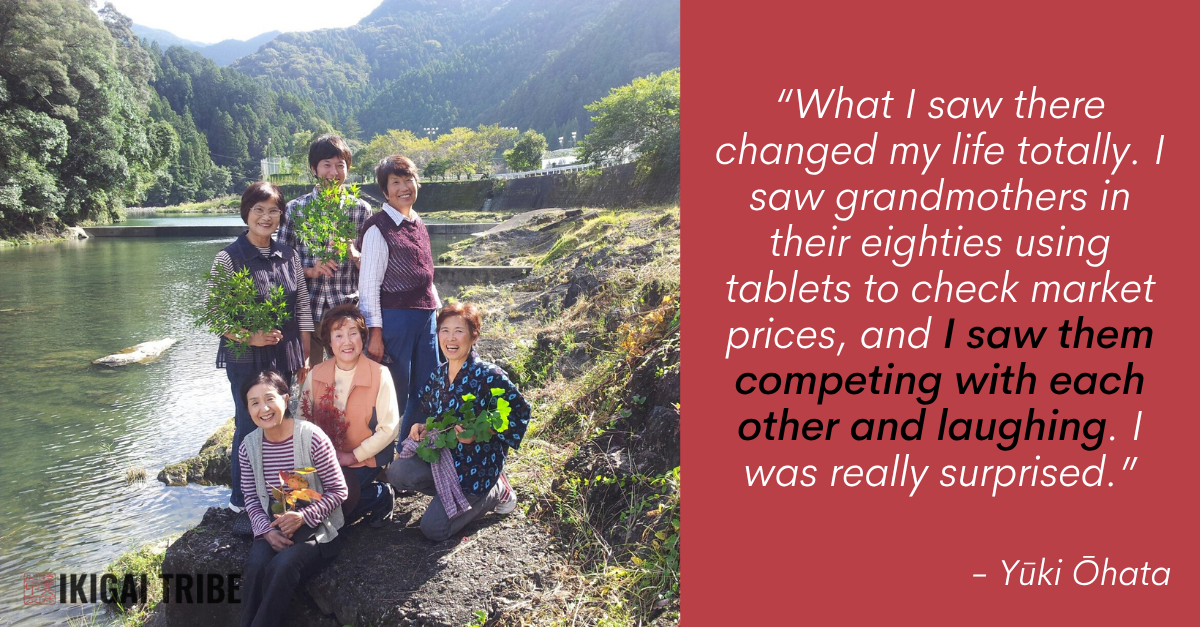
In 2010, he joined Irodori, a company based in the small town of Kamikatsu in Tokushima. The town is famous for its “leaf business,” in which primarily older farmers collect and sell decorative leaves and seasonal garnishes known as tsumamono. These are used to enhance the presentation of traditional Japanese dishes, particularly kaiseki cuisine.
What might sound like a modest agricultural activity developed into a celebrated rural revitalisation initiative.
Yuki began as a sales representative and later became a director. During his nine years with Irodori, he witnessed women in their eighties using tablets to monitor market prices, competing with one another and enjoying their work.
They were not simply being cared for. They were actively contributing.
They had a role.
The experience changed the direction of Yuki’s life. He became independent in 2018 and founded Sanchi no Mikata.
The Loss of Role
Yuki did not grow up dreaming of a career in agriculture. He did not study it, nor did he consider himself a farm boy.
What drew him to this work was not the produce. It was the people.
His grandmother had been a farmer. When she stopped farming, Yuki noticed that something changed in her. Although she remained physically capable, she lost her energy and the light she had once carried.
She no longer had a reason to get up in the morning.
At the time, Yuki did not have the language to explain what had happened. Looking back, he understands it clearly:
She had lost her role.
This led him to a question that continues to guide his work:
Why do people lose their light when they stop working?
For Yuki, agriculture provides a way to respond to that question.
“Agriculture is my method. It is not my purpose. My purpose is the people.”
Becoming an Ally to Producers
Sanchi no Mikata can be translated as “Ally of the Producing Region.”
The company supports farmers and producers by communicating the passion, commitment and personal stories behind their products. It then connects those producers with the customers, markets and restaurants that value what they grow.
Yuki’s goals are both economic and social:
- To help farmers earn more income.
- To create opportunities for older adults to continue working with enjoyment, pride and purpose.
One product Yuki has helped promote is Hohohota-ke, a variety of hanabira-take (Sparassis crispa), commonly known in English as the cauliflower mushroom.
The name hohoho evokes laughter and warmth, while take means mushroom. Naturally occurring hanabira-take grows only in limited environments at elevations above 1,000 metres, making it exceptionally rare and earning it the nickname “the phantom mushroom.”
Yuki and his collaborators developed the product’s name, premium packaging and brand. It has since become a recognised regional product and has been featured on Japanese television.
Building a New Leaf-Producing Region
Yuki’s most important project is his mission to transform Shizuoka into a new centre for the leaf business.
The project currently operates across the mountain communities of Tamagawa, Umegashima and Ryouchi. These are beautiful areas, but their populations are ageing, and many younger people are leaving.
Where others might see only decline, Yuki sees possibility.
The mountains are filled with leaves, and the people living there possess knowledge of the landscape that cannot easily be replaced. By connecting this knowledge with a viable market, Yuki hopes to create meaningful roles and new sources of income.
However, he is not attempting to reproduce the Kamikatsu model exactly.
The Kamikatsu initiative focused on revitalising one particular town. Yuki’s focus is not limited to a single location. He wants people throughout Shizuoka—and eventually throughout Japan—to be able to participate.
For him, the true measure of success is not simply how many leaves are sold. It is whether people become active again.
Creating an Ibasho
Yuki's new leaf business is becoming more than a source of work. It is creating an ibasho: a place where people feel they belong, have a role and know their contribution is valued.
Participation has grown from approximately five people to ten, and the group has completed its first shipments. A younger man has also expressed an interest in joining—an encouraging development in communities from which young people have traditionally moved away.
Yuki has noticed an important change. Initially, he handled almost everything himself. Now, the participants are taking ownership of the work. They inspect the leaves, prepare shipments and discuss quality with one another.
For Yuki, this is the moment that matters. Not simply when the product sells, but when people recognise that they are needed and begin moving forward together.
The positive response from buyers has further strengthened this sense of possibility. Although they were initially cautious about Shizuoka as a new production region, they are now asking what else the communities could grow.
A Role for Life
Yuki’s immediate goal is to grow the leaf business until older people in these communities can proudly say:
“I am still working, and I am proud of it.”
His longer-term vision is even more ambitious. He wants to change how people feel about growing older.
In Japan, as in many societies, ageing is often approached with anxiety, while retirement can be treated as the end of a person’s productive life. Yuki imagines something different: communities in which people can look forward to growing older because later life offers new opportunities to contribute and shine.
His aim is not merely to sell more leaves.
It is to build communities in which people can remain active, earn an income, experience ikigai and have a role throughout their lives.
As Yuki puts it:
Life needs a role.
Through the integration of agriculture, ikigai and rolefulness, Yuki hopes to share a new model of social fulfilment from the mountains of Shizuoka with the world.
His guiding principle captures that aspiration:
“To create, through agriculture, a society in which everyone can look forward to growing old.”