
This is a special deep dive written interview with Professor Tadanori Imai on the IKIGAI-9 scale. The scale is a psychometric tool developed by Tadanori Imai in collaboration with Hisao Osada and Yoshitsugu Nishimura. Its reliability and validity were reported in a paper published in 2012.
Professor Imai kindly accepted my invitation to take part in a written interview. With his permission, I created this blogpost so that the interview could reach a wider audience.
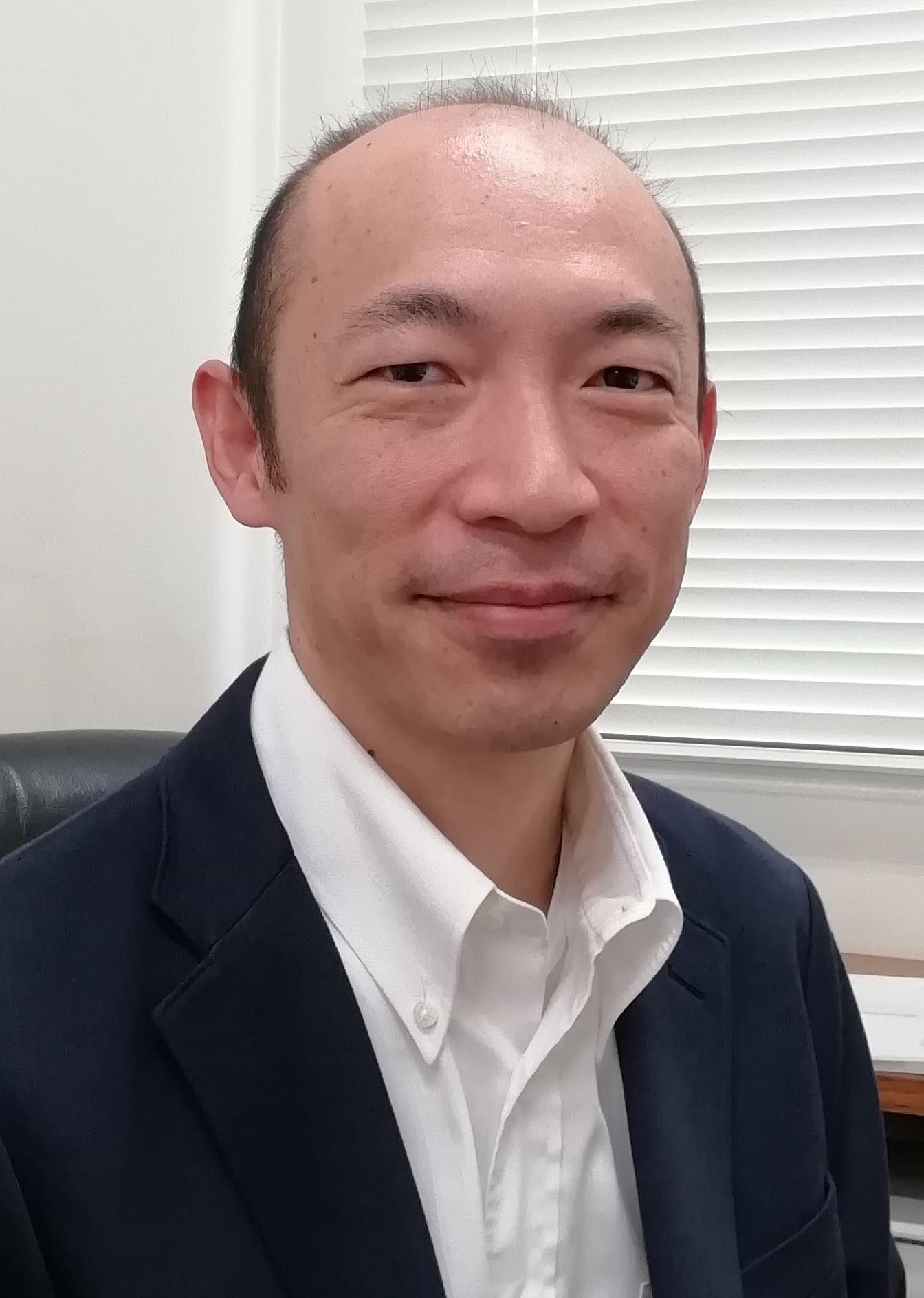
Professor Tadanori Imai is an occupational therapist, an occupational science and gerontology researcher, and a professor at Kitasato University in Japan. His research explores how participation in meaningful daily activities relates to health, well-being, quality of life, and ikigai.
He is best known as the lead developer of the IKIGAI-9, a psychometric scale designed to measure a person’s sense of ikigai. Originally developed and validated with community-dwelling older adults in Japan, the scale has since been translated and studied internationally.
Understanding Ikigai
Q1. What is ikigai?
Ikigai is a familiar Japanese word, but it is difficult to capture in a single English expression. Broadly speaking, it refers to a sense that life or daily living is worthwhile—something that brings meaning, joy, motivation, or a reason to keep going.
For everyday Japanese, people often use ikigai to describe its source. Someone might say, “My grandchildren are my ikigai,” “My work is my ikigai,” or “Gardening is my ikigai.” In these examples, the grandchildren, work, or gardening are the things that give rise to the feeling of ikigai.
In psychological research, however, we usually focus on the sense of ikigai itself: the subjective experience that one’s life and daily activities are meaningful, fulfilling, and worth living. This distinction between the sources of ikigai and the experience they create was also recognized by the Japanese psychiatrist Mieko Kamiya, whose work greatly influenced later ikigai research.
The two are closely connected, but they are not quite the same. A person may have several potential sources of ikigai without always feeling a strong sense of it. Another person may not be able to name one particular source, yet still experience meaning and hope through daily life as a whole.
Ikigai does not have to be a grand life mission. It may grow from work, family, relationships, social roles, creative activities, personal development, or small everyday experiences. In developing the IKIGAI-9, our main focus was this subjective sense of ikigai rather than simply identifying its sources.
Q2. Is ikigai simply another word for happiness?
No. Ikigai and happiness are closely related, but they are not the same.
Happiness often refers to positive feelings such as pleasure, enjoyment, or contentment. Ikigai may include these feelings, but it is broader. It also involves a sense that one’s life and daily activities are meaningful, worthwhile, and connected to something important. It may include hope for the future, personal growth, and a sense of connection or contribution to others.
This becomes clearer when we think about experiences that are meaningful but not always enjoyable. Raising children, caring for a family member, pursuing demanding work, or taking responsibility in a community can involve stress and difficulty. Yet these experiences may still provide a strong sense of ikigai because the person feels needed, committed, or connected to something they value.
The reverse can also be true. A pleasant meal, entertainment, or a holiday may bring happiness, but it does not necessarily create a lasting sense that life as a whole is meaningful.
So happiness can be one part of ikigai, but ikigai includes more than feeling good in the present. It also concerns whether a person sees meaning in life, feels motivated to move forward, and experiences value through relationships, roles, and activities.
This is reflected in the IKIGAI-9. The scale includes an item about feeling happy, but happiness is only one part of the wider experience it is designed to assess.
Q3. What are the defining characteristics of a sense of ikigai?
A sense of ikigai has several important features. First, it is multidimensional. It is not simply happiness or life satisfaction. It may include positive feelings about life now, hope for the future, personal growth, and a sense of meaning through relationships or contribution.
Second, it is personal and subjective. Two people living in similar circumstances may experience ikigai very differently. What matters is not only what a person does, but what that activity or role means to them.
This also means that ikigai is not determined by status, income, prestige, or social approval. Something that looks ordinary to others may be deeply meaningful to the person. On the other hand, something widely seen as successful or valuable may not provide ikigai at all.
A sense of ikigai is also dynamic. It can change with age, health, relationships, roles, and major life events. It may weaken during illness, loss, or transition and later take a different form.
It is often found in everyday life rather than in one grand mission. At the same time, although ikigai is a subjective experience, it is shaped by the opportunities, relationships, and environments available to the person.
So I would describe a sense of ikigai as a personal and changing feeling that one’s life and daily living have meaning, value, and direction.
Q4. How is ikigai different from purpose in life and life satisfaction?
Ikigai overlaps with both purpose in life and life satisfaction, but it is not exactly the same as either.
Life satisfaction is mainly about how positively people view their present life. It asks whether they feel satisfied with their current circumstances and life as a whole.
Purpose in life is more future-oriented. It is about having direction, meaningful goals, or something to work toward. This is certainly related to ikigai, but ikigai does not always require one clear purpose or long-term goal.
Ikigai brings these ideas together. It includes positive feelings about life now, hope and motivation for the future, and a sense of meaning through relationships, roles, or contribution to others and society.
Put simply:
- Life satisfaction focuses mainly on the present.
- Purpose in life focuses mainly on future direction.
- Ikigai connects the present and the future, while also including our connection with other people and society.
This was also a theme in my early research. In a 2009 study of older adults in Japan, I examined the structure of ikigai and its relationship with subjective well-being. The findings suggested that ikigai overlaps with well-being, but cannot be fully explained by happiness or life satisfaction alone.
Of course, these concepts do not have perfectly clear boundaries, and researchers define them in different ways. I would not say that ikigai is completely separate from ideas developed in Western psychology.
Rather, it offers a slightly different way of looking at a worthwhile life by bringing together present fulfilment, future direction, and our relationship with others and society.
Why and How the IKIGAI-9 Was Developed
Q5. What inspired you to begin researching ikigai?
When I began studying ikigai, it had not yet attracted the international attention it receives today. My interest grew from a question I encountered in gerontological research in Japan.
At that time, studies of ikigai among older adults often used measures of subjective well-being developed in Western countries, such as life satisfaction scales and the Philadelphia Geriatric Center Morale Scale. These were valuable measures, but ikigai was sometimes treated as though it could be fully represented by them.
I began to wonder whether that was really the case. Ikigai is certainly related to happiness, morale, and life satisfaction, but I was not convinced that they described exactly the same psychological experience.
There was also an interesting gap between research and practice. In Japanese health care and social welfare, supporting older people’s ikigai was often regarded as an important goal. Yet there was no widely shared or empirically established definition of what ikigai actually meant. The word was familiar, but its meaning varied between individuals and researchers.
That became the starting point of my master’s research. Before developing a new scale, I first examined the concept itself—how it had been defined, what its main psychological components were, and how it differed from subjective well-being.
The findings suggested that ikigai included aspects that could not be fully explained by happiness, morale, or life satisfaction alone. This early work later became the conceptual and empirical foundation for the IKIGAI-9.
So the scale began with a fairly simple question: If ikigai is considered so important in people’s lives and in care for older adults, what exactly is it?
Q6. How was the IKIGAI-9 developed?
The IKIGAI-9 was developed step by step through both qualitative research and psychometric analysis. We did not begin with nine questions, and we certainly did not assume that such a broad concept could be captured so easily.
We first reviewed earlier research on ikigai and related ideas. We also held exploratory group interviews with a small number of older adults who had retired from companies but were still active in an organization. Their stories helped us think more broadly about how ikigai might relate to activities, relationships, social roles, and contribution after retirement.
From the literature and interviews, we created more than 200 possible items. The first pool was deliberately wide-ranging. It included present fulfilment, hope for the future, personal growth, relationships, social roles, meaning, harmony with nature, and even experiences that might weaken a person’s ikigai.
We then carried out preliminary and main surveys with more than 400 healthy, community-dwelling older adults. The items were gradually reduced to around 60, and we used factor analysis and multidimensional scaling to examine the structure behind them.
At first, four factors appeared. Three represented positive aspects of ikigai, while the fourth reflected a feeling that one’s ikigai was being blocked or weakened.
We decided not to include this negative factor in the final scale. It appeared somewhat separate from the three positive dimensions, and we were also concerned about the burden on respondents. Many existing measures for older adults included numerous negative questions about dissatisfaction, loss, or ageing. We wanted the IKIGAI-9 to be easier and less uncomfortable to complete.
The final scale therefore uses only positively worded items representing the three positive dimensions. In choosing them, we looked at both statistical performance and meaning. An item had to contribute something important without being repetitive or difficult to answer.
The main challenge was balancing the richness of ikigai with practical simplicity. The nine final items were not chosen because we thought ikigai was simple. They were distilled from a much wider exploration so that the scale could remain meaningful while also being brief and easy to use.
Q7. How did you establish the reliability and validity of the IKIGAI-9?
We evaluated the IKIGAI-9 in several ways.
First, confirmatory factor analysis supported the proposed three-factor structure, with three items representing each dimension of ikigai.
Second, we examined internal consistency using Cronbach’s alpha. The results were good, even though the scale has only nine items in total and three items in each factor. Reliability is generally easier to achieve with a larger number of items, so our aim was to maintain adequate reliability while keeping the scale brief and practical.
We also examined its relationship with health-related quality of life using the SF-36v2. IKIGAI-9 scores showed almost no relationship with the physical health summary score, but weak to moderate positive relationships with the mental health summary score.
This was an interesting finding. It suggested that ikigai is not simply a reflection of physical health. Even when people have physical limitations, they may still experience meaning, hope, motivation, and a sense that they are valued. Its closer relationship with mental health was also consistent with ikigai as a psychological experience.
In addition, the IKIGAI-9 was related to subjective well-being and other relevant psychological concepts, while remaining distinguishable from general happiness, life satisfaction, and physical health.
These initial findings were reported in our 2012 development paper. Since then, the IKIGAI-9 has been used in a wide range of studies and with different populations, both in Japan and internationally. This continued use has provided further opportunities to examine how the scale performs across different settings.
Overall, the findings support its three-factor structure, internal consistency, and validity as a brief measure of a sense of ikigai. At the same time, reliability and validity are never established once and for all. They should continue to be examined in different populations, languages, and cultural contexts.
Q8. Can nine questions really capture something as complex as ikigai?
Not completely. No psychological scale can capture everything about something as personal and complex as ikigai.
A scale is designed to identify common patterns across many people. It cannot fully describe each person’s unique experiences, values, relationships, or philosophy of life. The IKIGAI-9 was therefore not created to explain the whole of someone’s ikigai. It offers a brief and systematic way to assess its central psychological features.
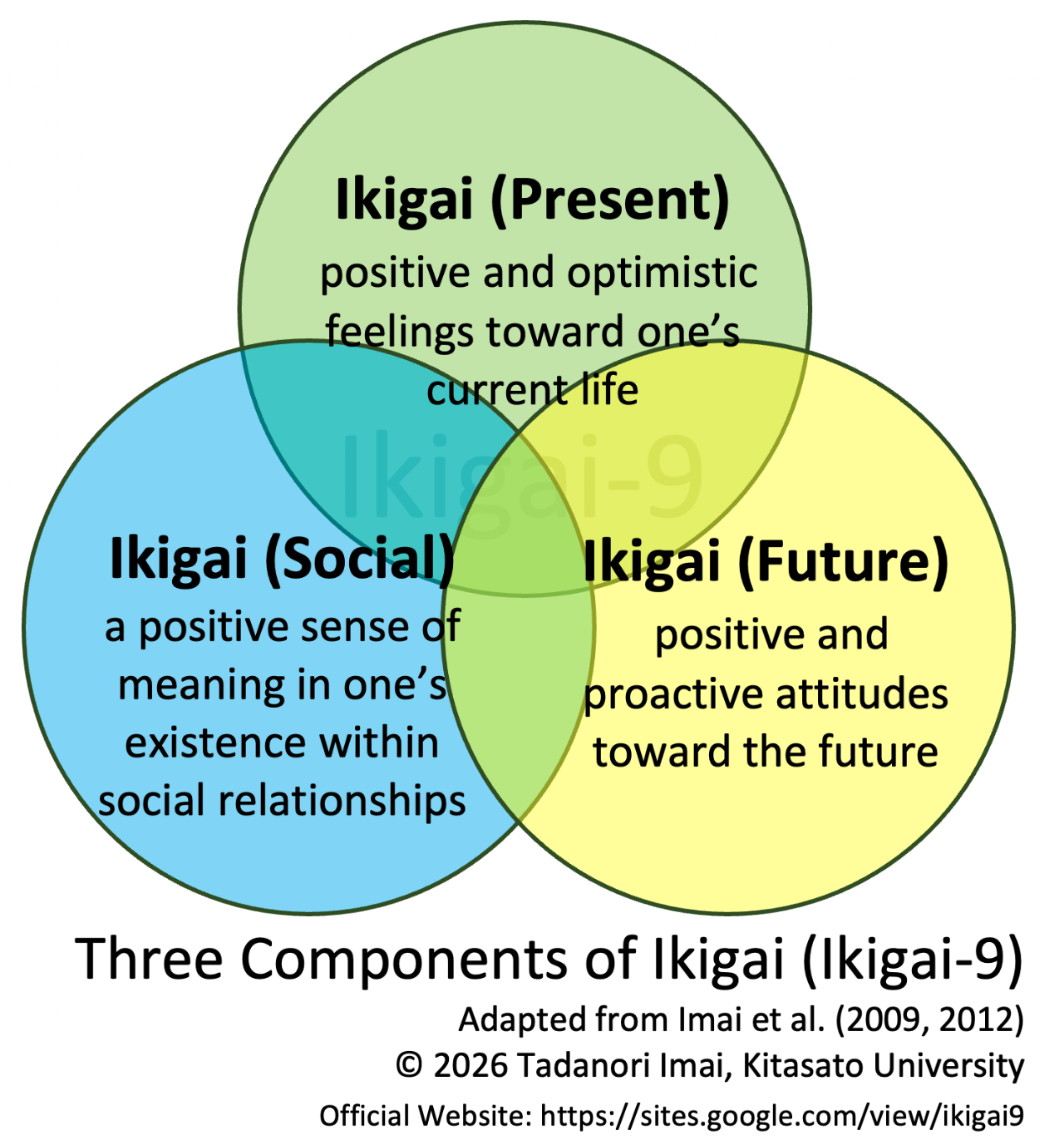
The nine items cover three dimensions: positive feelings about present life, a positive and active attitude toward the future, and a sense that one’s existence has meaning through relationships with other people and society.
The scale is short by design. As I mentioned earlier, the final nine items were selected from more than 200 candidates through qualitative research and psychometric analysis. We tried to retain the common core of ikigai while making the scale easy to complete.
The IKIGAI-9 is especially useful in research—for example, when comparing groups, examining relationships with health or social factors, or looking at changes before and after a program. However, it is not a diagnostic tool and should never be used to judge the value or meaning of someone’s life.
For personal use, changes in one’s own responses over time are generally more meaningful than comparisons with other people. The results can also provide a starting point for reflecting on what currently gives a person ikigai and how that may be changing.
Timing also matters. After a major loss or during a period of serious difficulty, questions about meaning and hope may feel burdensome. In such situations, the person’s immediate needs should come before measurement.
So, nine questions cannot capture the whole individuality of ikigai. What they can provide is a concise, research-based picture of its common psychological core and how it may change over time.
What the Nine Items Reveal
Q9. What are the three dimensions of the IKIGAI-9?
The IKIGAI-9 has three dimensions, with three items in each. These dimensions were identified through the scale-development research and represent features of ikigai that are relatively common across people.
The first dimension is positive feelings about present life. It includes fulfilment, happiness, a sense that life is rich, and inner ease. In simple terms, it reflects how positively someone feels about life now.
The second dimension is a positive and active attitude toward the future. It includes having interests, wanting to grow, feeling motivated to try something new, and seeing possibilities ahead. Ikigai is therefore not only about enjoying the present, but also about having the energy to move forward.
The third dimension is a sense of meaning through relationships with other people and society. It includes feeling needed, having a role, contributing to others, or feeling that one has value. This does not require a major achievement or formal position. It may come from family, friendship, work, caregiving, or small everyday roles.
Put simply, the three dimensions are about the present, the future, and our connection with others and society. They are different, but closely connected.
People may also show different patterns. Someone may feel fulfilled in daily life but have little hope for the future. Another person may be strongly motivated toward a goal but feel less connected to others. The IKIGAI-9 helps us look at these dimensions separately as well as through an overall score.
This is also why ikigai is more than happiness alone. It includes positive feelings in the present, but also future orientation and meaning through relationships and society.
The accompanying Three Components of Ikigai figure shows these three dimensions visually.
Q10. If ikigai is different from happiness, why does the IKIGAI-9 include the item “I often feel that I am happy”?
That item should not be taken to mean that the IKIGAI-9 simply measures happiness.
We included “I often feel that I am happy” as a broad and easy-to-understand expression of how positively a person feels about their present life. It uses familiar everyday language rather than a technical definition of happiness.
Happiness itself can mean different things. It may refer to a temporary emotion, an overall evaluation of life, or a broader sense of well-being. So one item using the word “happy” does not measure the whole psychological concept of happiness.
The first dimension of the IKIGAI-9 is also broader than happiness. It is represented by three items concerning happiness, a rich and fulfilling life, and inner ease. The meaning of the dimension comes from these items together, not from the happiness item alone.
The item was retained because it contributed well to this broader dimension during the scale-development research—not because we assumed that happiness and ikigai were the same.
Ikigai also includes the other two dimensions: a positive and active attitude toward the future, and a sense of meaning through relationships with other people and society. Happiness is therefore one part of the picture, but not the whole of ikigai.
Q11. One of the IKIGAI-9 items refers to having yutori in one’s mind. What does yutori mean in this context?
Yutori is a familiar Japanese word, but it is not easy to translate precisely. Depending on the context, it can mean having enough time, space, resources, or capacity. In the IKIGAI-9, however, it mainly refers to psychological space, composure, or inner ease.
It describes a state in which the mind is not completely filled with worries, pressure, duties, or immediate problems. When people have this kind of inner space, they may be better able to reflect, notice others, appreciate everyday experiences, and respond more calmly and flexibly.
When yutori is lacking, urgent concerns may take up most of a person’s attention. This does not mean that the person lacks maturity or coping ability. Illness, financial difficulty, caregiving, loss, or heavy responsibilities can naturally reduce one’s sense of inner space.
Yutori is also not simply the same as having free time or financial comfort. A busy person may still feel composed, while someone with plenty of time may remain mentally preoccupied.
Within the IKIGAI-9, this item belongs to the dimension of positive feelings about present life. Together with the items about feeling happy and experiencing life as rich and fulfilling, it reflects how positively and fully a person experiences life now.
The word may have a particular resonance in Japanese, but the underlying experience is not unique to Japan. The challenge in translation is to convey this sense of psychological space and inner composure, rather than simply replacing the word itself.
Q12. One of the IKIGAI-9 items asks whether a person feels that their life is rich and fulfilling. What does “rich” mean in this context?
The original Japanese item says that one’s life feels yutaka ni jūjitsu shite iru—“rich and fulfilling.” Here, “rich” does not refer only to money or material comfort. It means that a person experiences their present life as full, satisfying, and meaningful.
That sense of richness may come from relationships, valued activities, learning, creativity, nature, personal growth, spiritual experience, or simply having variety and depth in everyday life. Material security can certainly help, but wealth alone does not necessarily make life feel rich.
The item deliberately does not specify where that richness should come from. It differs from person to person. For one person, it may come from family or work; for another, from friendship, creative activity, contribution to others, or small daily experiences.
The words “rich” and “fulfilling” also work together. “Rich” suggests that life contains meaningful experiences and depth, while “fulfilling” suggests that these experiences bring satisfaction.
So the item is asking about the overall quality and fullness of a person’s present life, rather than about financial success or any one particular source of happiness.
Q13. Do people need many roles—or one unique role—to experience ikigai?
Roles can be an important source of ikigai because they allow people to contribute, feel connected, and know that they are needed. These roles may come through family, work, friendship, caregiving, community activities, or small everyday responsibilities.
But people do not necessarily need many roles. Having several roles can provide different sources of meaning and may help when one role is lost, for example after retirement. At the same time, too many roles can lead to pressure and exhaustion. What matters more is whether a role feels meaningful and manageable.
I also do not think everyone needs to discover one unique role or life mission. That idea may be helpful for some people, but it can also create unnecessary pressure. Ikigai may come from several ordinary roles rather than one defining purpose. Even a small role can be deeply meaningful if it allows someone to care, contribute, or feel connected.
Roles also change over time. Losing an important role can weaken a person’s sense of ikigai, but new roles and sources of meaning may emerge through other activities and relationships.
It is also important that the role has personal meaning. Being needed does not automatically create ikigai if the role is experienced only as a burden or is imposed by others.
So, rather than asking whether someone has enough roles or has found one special role, it may be more useful to ask: Which roles currently bring meaning, contribution, and connection—and which have become burdensome?
From Japan to the World
Q14. Is ikigai uniquely Japanese, and how might Japanese culture have shaped it?
The word ikigai is distinctly Japanese, and its meaning has been shaped by Japanese language, history, and culture. But the experiences behind it—meaning, hope, fulfilment, connection, and feeling that life is worthwhile—are not unique to Japan.
It may therefore be helpful to distinguish the Japanese cultural form of ikigai from the broader human experience it describes. People in many cultures find meaning through relationships, activities, growth, contribution, and hopes for the future, although these elements may be expressed differently.
One possible Japanese influence is the importance traditionally placed on roles and mutual support within families and communities. A person’s value may be felt not only through personal achievement, but also through fulfilling responsibilities, contributing, and being needed by others. This may be related to the IKIGAI-9 dimension concerning one’s meaning in relation to other people and society.
Japanese traditions of craftsmanship and following a particular dō, or “way,” may also be relevant. In these traditions, steadily improving one’s work or practice can have value in itself, even without status, recognition, or financial reward.
Religious and spiritual traditions may also have encouraged an appreciation of simplicity, nature, impermanence, everyday experience, and non-material forms of fulfilment.
At the same time, Japanese society has changed. Today, ikigai may also be strongly connected with personal interests, autonomy, self-development, and self-chosen goals, while relationships and social roles remain important.
I would treat these cultural influences as possibilities rather than fixed truths. Japanese people differ greatly, and similar values are found in many other cultures. The more interesting question is how shared human experiences of a worthwhile life are shaped and expressed differently across cultures and historical periods.
Q15. What should researchers consider when translating and using the IKIGAI-9 in other cultures?
Translating the IKIGAI-9 involves more than replacing Japanese words with their nearest equivalents. The aim is to preserve the psychological meaning of each item while expressing it naturally in the target language and culture.
Some expressions, especially yutori, do not have one exact equivalent. Even familiar ideas such as happiness, fulfilment, personal growth, or being needed may carry different meanings across cultures. A translation can therefore be linguistically correct but still give a slightly different psychological impression.
A careful adaptation process should include forward and back translation, discussion among bilingual researchers and specialists, and interviews with people from the target population to check how they understand the items. Collaboration with the original developers can also help clarify the intended meaning.
Studies of translated versions have not always found the same structure. The original three-factor structure was supported in the German version, while studies in the United Kingdom and Turkey found a single-factor structure. The French version identified three dimensions, although one item was grouped differently.
I was involved in developing the German version, which allowed us to discuss the meaning of the original Japanese items directly. This may have helped maintain continuity with the original scale, although it cannot fully explain the results.
Differences between language versions may reflect culture, but they may also come from translation choices, sample characteristics, or analytical methods. We should therefore be careful not to interpret every difference as a fundamental cultural difference in ikigai.
Each translated version should be tested for factor structure, reliability, and relationships with related concepts. Researchers comparing scores across cultures should also examine measurement invariance. Otherwise, apparent differences may reflect how people interpret and answer the items rather than genuine differences in ikigai.
Cross-cultural adaptation is therefore not simply a translation task. It is also a valuable way to explore which aspects of ikigai are widely shared and which are shaped by language, culture, and everyday life.
Using the IKIGAI-9 Responsibly
Q16. Can the IKIGAI-9 be used as a self-assessment or professional coaching tool?
The IKIGAI-9 was developed mainly as a research tool for groups. It is useful for examining average tendencies, relationships with health and social factors, differences between groups, and changes before and after a program.
It was not designed to decide whether an individual has “enough” ikigai. There is no cut-off score, and a single number cannot tell us whether someone’s life is meaningful or worthwhile.
I also do not recommend comparing one person’s score with another’s. The scale was not designed to rank people. Scores can be influenced by health, age, roles, life circumstances, and cultural differences in how people respond. The same total score may also reflect very different patterns across the three dimensions.
For personal use, it is more helpful to compare a person’s responses with their own earlier responses. This may provide an opportunity to reflect on how their sense of ikigai has changed over time, alongside changes in their daily activities, relationships, roles, interests, and outlook on life. It can also be useful to consider which dimension has changed and what may have contributed to that change.
Even then, scores should not be interpreted too mechanically. A temporary decline during a difficult period may be a natural response to the person’s circumstances.
In coaching or guided reflection, the IKIGAI-9 can be used as a starting point for conversations about daily activities, relationships, roles, hopes, and sources of fulfilment. The aim should not simply be to raise the score, but to understand what currently supports or limits the person’s sense of ikigai.
So, the IKIGAI-9 can be useful for self-reflection or coaching, but only as a supplementary tool. It is not a diagnostic measure, and it should not be used to compare clients, judge personal worth, or certify that someone has “found” their ikigai.
The Future of Ikigai Research
Q17. Are you continuing your research on ikigai?
Yes, although ikigai has always been one of my secondary research themes rather than my main area of research.
To be honest, after developing the IKIGAI-9, ikigai itself was not a major focus of my work for some time. I continued to use the scale as one of the outcome measures in studies on health, participation, and quality of life, but I was not concentrating mainly on ikigai research.
In Japan, requests to use the scale gradually increased, although only slowly. Ikigai was still generally regarded as a relatively niche topic within gerontology.
The situation began to change around ten years ago. I started receiving more enquiries from researchers outside Japan about using the IKIGAI-9 and developing translated versions. At the same time, the concept of ikigai was attracting much wider international attention. This led me to take a renewed interest in the topic.
I have also found it very interesting that ikigai research is now spreading into fields I had not originally expected, including human–computer interaction, robotics, and information science. Seeing the concept explored in relation to technology and human well-being has opened up new perspectives for me.
As international research continues to grow, I am increasingly interested in ikigai as a topic within well-being research and positive psychology that takes cultural diversity seriously. What especially interests me now is how ikigai can help us explore both the shared and culturally different ways in which people experience meaning, fulfilment, hope, and a worthwhile life.
Q18. What is your personal ikigai?
When people ask about my personal ikigai, they are usually asking what I regard as its source or object.
To be honest, I find this question surprisingly difficult. I have spent so much time thinking about the concept of ikigai that, whenever I consider whether something is my own ikigai, I immediately start analysing why I feel that way and whether it really fits the concept.
Mieko Kamiya wrote that a strong sense of mission can be one of the deepest forms of ikigai. Intellectually, I know that ikigai does not require a grand mission. Personally, however, I tend to reserve the word for something especially important. That may simply be part of my personality.
But if I answer more simply, my ikigai may include the health and happiness of my family, a peaceful and calm everyday life, seeing my students grow, the development of my research, and knowing that the scales I have developed are being used and are helpful in many studies. My own health and the hope of living a long life are also important to me.
I am currently in my early fifties, so perhaps one particular source of ikigai will become clearer as I grow older and gradually focus my time and energy on fewer things.
For now, however, I am more interested in maintaining a good balance among work, family, leisure, and other parts of life. As an occupational therapist and occupational science researcher, I naturally value occupational balance—the balance among meaningful activities and roles.
So at this stage of my life, perhaps my ikigai is not one single activity or mission. It may lie in creating a balanced life in which several important relationships, roles, and activities can grow together.
A Word of Thanks
Thank you for giving me this opportunity to reflect on ikigai and the development of the IKIGAI-9. I am very pleased that my research has helped deepen your understanding of ikigai and has had a positive influence on your life.
I also appreciate the care you have taken in introducing ikigai internationally while respecting its Japanese background and complexity.
I hope this interview encourages listeners and readers not to feel that they must find one perfect ikigai or grand mission. Instead, I hope they can reflect more freely on the relationships, roles, activities, hopes, and everyday experiences that make their own lives meaningful.
I also hope the IKIGAI-9 can contribute to a better understanding of ikigai through empirical research. Its three-factor structure is not the final answer, but it may provide a useful starting point for future research and discussion.
Ikigai remains something for me to keep thinking about as well. I look forward to seeing where future international dialogue and research will take us.