
Can we heal through sound?
In this episode of the Ikigai Podcast, Nick speaks with Nanako Aramaki to explore how sound therapy works, its benefits, and how it can promote relaxation, balance, and healing.
Podcast Highlights
- Nanako’s backstory. Nanako shares a bit about her background.
- Journey to flamenco. Nanako shares how she found her path to the dance.
- Influence of Japanese heritage. Nanako reflects on how Japanese culture influenced her life in Canada.
- Moving back to Japan. Nanako shares what led her return to Japan.
- Having experienced adjustment disorder. Nanako recalls her struggle during her move to Japan.
- Recovering from burnout. Nanako discusses how she overcame extreme burnout.
- Sound therapy. Nanako explains what sound therapy is.
- Exploring sound therapy. Nanako shares how she got into sound therapy.
- Discovering purpose through sound therapy. Nanako shares how learning it gave her a sense of purpose.
Nanako Aramaki

Nanako Aramaki is a Japanese-Canadian currently living in Japan. Born in Japan and raised in Canada, she has woven a rich tapestry of experiences—performing as a flamenco dancer in Europe, and later serving as Chief Operating Officer for a content marketing agency, where she led digital marketing campaigns for both Japanese- and English-speaking markets.
Nanako’s backstory
Nanako was born in Tokyo and moved to Canada at age three, where she grew up and built a marketing career. After burning out, she moved to Berlin, balancing part-time marketing with flamenco dancing, touring Germany, teaching, and building a community of international artists.
In 2014, she relocated to London to be closer to her sister, earning an exceptional talent visa as a flamenco dancer and touring globally while continuing marketing work. A foot injury ended her full-time dance career, prompting her return to marketing, where she first used Japanese professionally. She later married a Japanese man and moved to Japan.
Journey to flamenco
Japan has one of the largest flamenco markets in the world, with more clubs and academies than Spain. Nanako’s mother, a lifelong dancer, introduced her to flamenco through her mentor in Vancouver, though Nanako initially had little interest. She stayed with it because of its difficulty, eventually growing to love it.
While living in Tokyo and working intensely, she danced less frequently, performing regularly for a couple of years before taking a break for over a year.
Influence of Japanese heritage
Growing up in multicultural Vancouver, Nanako didn’t fully realize the influence of her Japanese heritage—it felt normal to speak Japanese at home and follow cultural traditions, such as Shinto values from her grandparents.
Her awareness of her identity deepened after moving to Europe, where people questioned her background, and later in Japan, where for the first time she was part of the majority and could blend in linguistically and culturally while retaining foreign perspectives.
She feels fortunate to have faced minimal racism in Canada, unlike some peers in other countries, and has never struggled with feeling ‘not enough’ for either culture.
Moving back to Japan
Nanako moved to Japan during the pandemic after meeting her husband while touring Japan. They planned to marry in Japan, but the pandemic trapped them in London. She decided to move to Japan to be near her elderly grandmother, who was alone near Tokyo and might need support.
Although Japan wasn’t fully locked down, people avoided social contact, so Nanako spent meaningful time with her grandmother. Living in Japan was a longtime dream for her, as she had only visited before, mostly during school breaks, and now she’s finally living and working there.
Having experienced adjustment disorder
Nanako describes how prolonged overwork and burnout—compounded by her inability to say no or ask for help—led to adjustment disorder. Her symptoms, including anxiety and panic attacks, were triggered specifically by work stress rather than all aspects of life. Despite seeking a doctor in Japan who offered alternative treatments, she was only prescribed medication, with little emphasis on therapy.
She found that in Japan, extended leave from work is often the main recovery approach, reflecting a broader work culture that normalizes extreme stress and even risks like karoshi (death from overwork). Nanako warns that if she had continued her job for another six months, her health might have been in serious danger.
While she values Japanese culture and has assimilated deeply, she believes the country needs to reduce the stigma around mental health and normalize seeking help—without erasing the cultural traits that make Japan unique.
“I think that we just need to normalize talking about these kinds of mental health issues and try to minimize the stigma around getting help.” - Nanako Aramaki
Recovering from burnout
Nanako recovered from adjustment disorder by quitting her full-time job, a difficult decision given her love for the company and colleagues. Initially, she took time off and traveled—to Bali for a yoga retreat (where she discovered sound therapy), Spain to reconnect with friends and explore living abroad, and Chiang Mai to study sound therapy. These trips provided healing experiences and fresh perspectives, ultimately confirming that she wanted to stay in Japan.
Although travel left her physically tired, it helped her confront personal patterns—such as over-responsibility and people-pleasing—that had contributed to her burnout. With support from a coach and self-reflection, she addressed these patterns and past traumas, ensuring she wouldn’t repeat them. Her recovery was not just about leaving work but fundamentally changing her mindset and habits.
Sound therapy

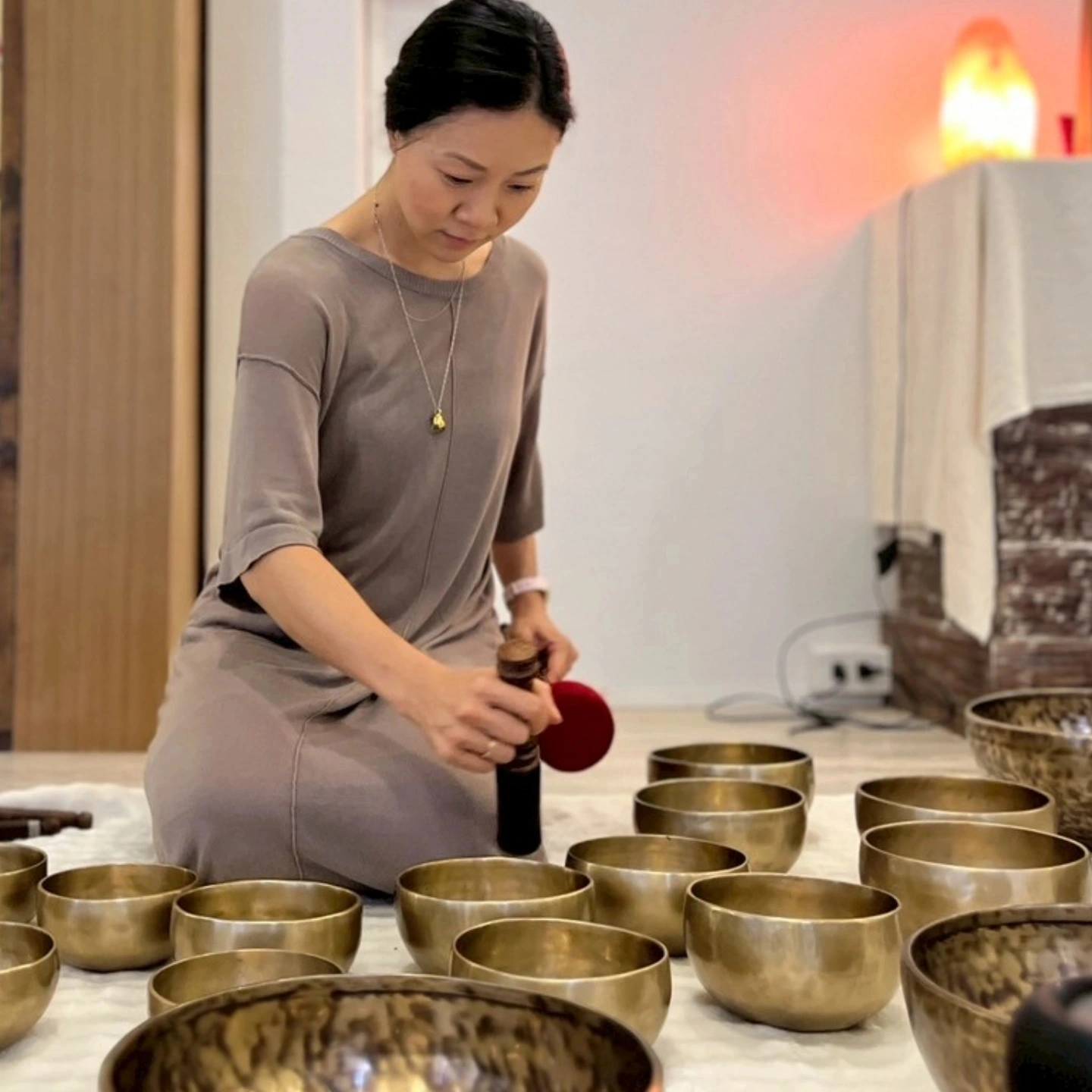
Nanako describes sound therapy as using the frequencies and vibrations from Tibetan metal singing bowls to influence the nervous system and brainwaves, inducing a deeply relaxed theta state. This helps reduce overthinking, anxiety, and stress. When applied directly to the body, the vibrations penetrate muscles, organs, and bones, producing tangible effects—clients often find it more effective than massage, sometimes releasing long-held emotions.
Unlike talk therapy, it’s non-invasive, requiring no verbal processing, making it accessible to people at different readiness levels. It can be purely relaxing or combined with coaching for deeper emotional work.
“Sound therapy works with your nervous system and your brainwaves; it puts you in a very relaxed, calm theta brainwave state, which helps with overthinking.” - Nanako Aramaki
Exploring sound therapy
Nanako first experienced a sound bath in Bali, but her real inspiration came after meeting her mentor, Ali Young from Chiang Mai Holistic, in Tokyo. She admired his humility, selflessness, and genuine passion for helping others, free from ego. After a powerful one-on-one session with bowls placed on her body to release energy, she decided to study with him in Chiang Mai.
The training not only taught her techniques but also became a deeply healing, transformative experience, giving her personal revelations. She highly recommends it for anyone seeking transformation, answers, or stress relief.

Discovering purpose through sound therapy
Nanako realized she couldn’t return to marketing because it lacked a true sense of purpose, or ikigai. While she enjoyed helping clients and bridging communication between global and Japanese teams, the work felt too indirect. Sound therapy, however, allows her to help people directly—reducing stress and promoting happiness in both one-on-one and group settings—which she feels she was born to do.
With her cultural background, language skills, and approachability as a Japanese practitioner, she sees sound therapy as an accessible way to reach people in Japan, especially those who might resist coaching or therapy, and help them discover alternatives to unfulfilling work.
“We find our purpose when we create this role where we can fully express ourselves, there is some uniqueness to it, and it helps others.” - Nicholas Kemp
Conclusion
When we face extreme stress and burnout, the most effective response is often to pause and take time to reflect. Find the coping methods that work best for you. One powerful option is sound therapy—using sound waves to guide the body into deep relaxation, helping it recover and heal from stress.