Haruhiko Tanaka Ikigai Tribe

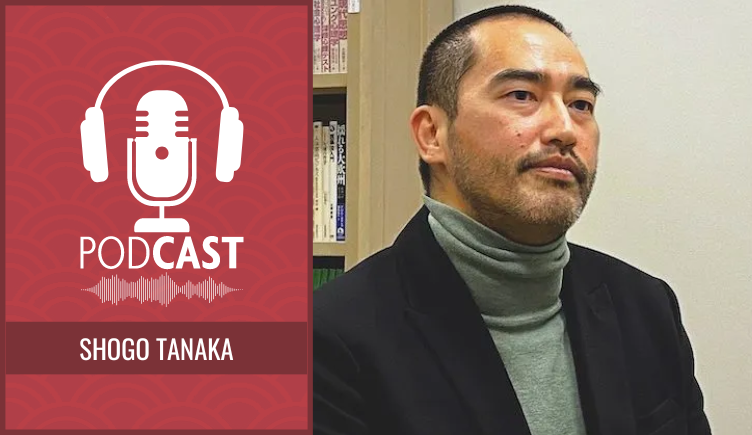
62 – Ibasho: Building Connections and Empowerment Through Belonging with Prof. Haruhiko Tanaka

“The old Japanese word ibasho has been used in everyday situations. Like, please tell me his ibasho, his roundabout, his way about. The use of this term ibasho was newly used in policymaking and research in the 1990s. The background of this is that in the 1980s, the problem of Japanese education was truancy, those who do not attend schools.

And the Minister of Education in Japan gave a report on a policy of transit in 1992. The subtitle was, ‘Give them ibasho in schools.’ So ibasho was used in policymaking. And after that, researchers in the field of education, psychology, sociology, and architecture use the word ibasho as a technical term.”

62 – Ibasho: Building Connections and Empowerment Through Belonging with Prof. Haruhiko Tanaka Read More »

Masayuki Matsubara

61 – Friendship and Ikigai: The Shared Journey of Meaning and Connection

“These challenges taught me valuable lessons and helped me grow personally and professionally. We gained a deeper understanding of our strengths and weaknesses, and we honed our problem-solving skills. Moreover, these experiences allowed us to develop a broader perspective and expand our knowledge and capabilities. We learn to adapt to new situations and think creatively to overcome challenges. We discover the significance of collaboration and effective communication in achieving our goals.”

61 – Friendship and Ikigai: The Shared Journey of Meaning and Connection Read More »

Jamila Rodrigues

60 – Navigating Crisis with Ikigai with Jamila Rodrigues

“The participants gave me the idea of losing ikigai, maintaining ikigai, recovering ikigai, or finding new ikigai. Ikigai becomes very dynamic, because it’s either lost or maintained or recovered. A lot of participants told me that during the crisis, and also after the crisis, nature was the kind of connector, and this is how I ended up being so interested on environmental issues, and sustainability, and perceptions of climate change crisis, and what does the connection of people with nature have to do with their well-being?

So during the crisis, they felt that connecting to nature helped to overcome the crisis. And after the crisis, still appreciating nature was something that was very much rooted in people’s experiences.”

60 – Navigating Crisis with Ikigai with Jamila Rodrigues Read More »

Yujiro Seki Ikigai Tribe

59 – Unravelling the Beauty of Japanese Craftsmanship with Yujiro Seki

“So when I started making the film when I was in high school, the comedy detective film, and showed it to people in my school, and made people laugh, that empowered me. And I felt something special about making something out of nothing. So filmmaking became my ikigai. But when I started working on carving the divine, it’s not ikigai anymore.”

59 – Unravelling the Beauty of Japanese Craftsmanship with Yujiro Seki Read More »

Sachiaki Takamiya

58 – The Benefits of Ikigai Bio-Hacking with Sachiaki Takamiya – Part 2

“In today’s world, many people try to grow and grow and grow. They think growth is always important. Once you reach one level, then you need to grow farther. But for me, once you’re comfortable, then maybe you move to the next phase of helping others to grow, or working on your other areas of life, and so on. Just limit the growth, and then be satisfied with your own lot is taru wo shiru.

And in fact, if everybody practises taru wo shiru, then the world becomes more sustainable. Because we can sustain a kind of wealth of comfortable level for each individual, but we cannot sustain the planet if a few people want to gain so much wealth. That’s impossible.”

58 – The Benefits of Ikigai Bio-Hacking with Sachiaki Takamiya – Part 2 Read More »

Sachiaki Takamiya

57 – The Benefits of Ikigai Bio-Hacking with Sachiaki Takamiya – Part 1

“We need about 30 different kinds of fibre a week, which is a lot, because if we think of fibre, we think of vegetables. But how many vegetables do you eat regularly? Maybe 10. But that is quite difficult to find only from vegetables. But there is this system in Japan called Mago Wa Yasashii.

So Mago Wa Yasashii, basically, you consume a lot of beans, a lot of nuts and seeds, a lot of seaweeds, fish, vegetables, mushrooms, and potatoes. Except for fish, they all contain a lot of fibre. You can easily find 30 different kinds of fibre if you use Mago Wa Yasashii.”

57 – The Benefits of Ikigai Bio-Hacking with Sachiaki Takamiya – Part 1 Read More »

Jamila Rodrigues

56 – The Embodiment of Ikigai with Jamila Rodrigues

“The way I see it, ikigai is a body and mind experience that occurs when participants reflect on it and connect it with certain aspects of their lives. The body is both a natural pre-reflective self and an important medium for reflexivity, therefore, thinking, perceiving, imagining, and feeling ikigai experience are all parts of bodily knowledge.

If we are to study phenomenons like ikigai and its experience, we need to place the body at its centre, because this experience comes from people’s perceptions, orientation and engagement with the world and requires body knowledge to embody and make sense of itself and its interrelated dimensions.”

56 – The Embodiment of Ikigai with Jamila Rodrigues Read More »

Dr. Ariadne Ferro

55 – Ikigai and ADHD with Dr. Ariadne Ferro

“Because of just all the changes I’ve made in my life, I just had finally moved into a moment in my life where I thought, I just want stability, I don’t want drama. I just want to enjoy my family and just do my thing. But I realised that the work that I was doing wasn’t the work that I enjoyed doing and didn’t believe in it. I didn’t want to continue doing it. And I just felt, I just felt pretty lost.

And somebody, somebody that I met on LinkedIn, I think the purpose was for her to tell me about your course. I started researching, what’s this ikigai? I saw it as an opportunity to learn to ground myself, to just stop for a moment and think: Where am I going to go next? What’s going to happen? But first, I need that grounding.” – Ariadne Ferro

55 – Ikigai and ADHD with Dr. Ariadne Ferro Read More »

Natasha Randall Ikigai Tribe

54 – The Impact of Technology on Our Ikigai Sources with Natasha Randall

“So I never really thought about my ikigai sources until you hear the word ikigai, and then it’s all you can think about. I would say for me, I have multiple sources of ikigai. One thing that really provides me with a sense of it is looking back on my day and knowing I’ve accomplished something.

Another thing that gives me ikigai is dancing. So just living in that experience in the body, getting lost in it, completely engaging in that activity. And that also lends itself to progress as well.” – Natasha Randall

54 – The Impact of Technology on Our Ikigai Sources with Natasha Randall Read More »

Kiku Day Ikigai Tribe

53 – The Mindful Playing of the Shakuhachi with Kiku Day

Kiku Day is a shakuhachi player, a PhD ethnomusicologist, and a world traveller from Copenhagen, Denmark. Her work lies at the intersections of performance of traditional shakuhachi music, contemporary music and improvisation, ethnomusicology, history, politics, meditation, and writing. She studied shakuhachi with Okuda Atsuya, one of the foremost performers of jinashi shakuhachi, in Tokyo, Japan for 11 years before returning to Europe to study ethnomusicology at School of Oriental and African Studies at University of London.

53 – The Mindful Playing of the Shakuhachi with Kiku Day Read More »