
How do you deal with pain?
In this episode of the Ikigai Podcast, Nick speaks with Kiki Fukai about how physical pain changed her perspective, purpose, and approach to life.
Podcast Highlights
- A life of freedom before the fall. Kiki shares her experiences as a digital nomad.
- The day everything changed. Kiki reflects on her life-changing accident.
- Gratitude before fear. Kiki shares how she felt when she first woke up after her accident.
- Rehabilitation and rebirth. Kiki shares her recovery journey after the accident.
- Choosing an authentic life. Kiki shares how she chose to live life on her own terms.
- Kintsugi: becoming stronger through breaking. Kiki likens her experience to the Japanese concept of kintsugi, the art of repairing broken pottery with gold.
- From survival to purpose. Kiki shares how her accident impacted her professional life.
Kiki Fukai
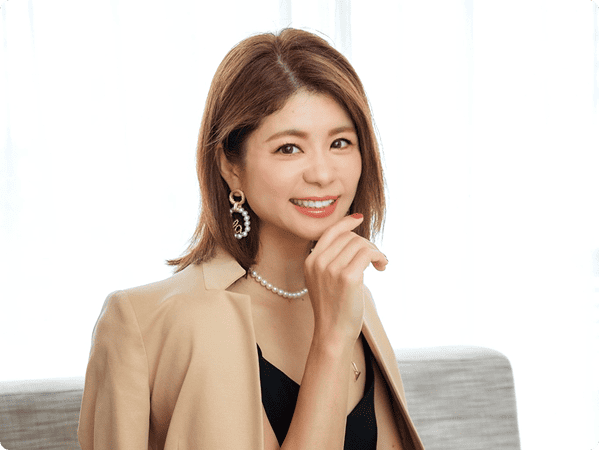
Kiki Fukai is a digital nomad and life coach who has traveled to over 60 countries while building her business online. In February 2023, a near-death snowboarding accident profoundly changed her life. After an intense rehabilitation and a remarkable recovery, Kiki now lives with greater intention, guided by a deep sense of ikigai.
A life of freedom before the fall
Before her life-altering accident, Kiki was living what many would call a dream. After leaving the corporate world, she embraced a nomadic lifestyle, traveling to more than 60 countries while building an online career. Freedom, movement, and curiosity defined her days.
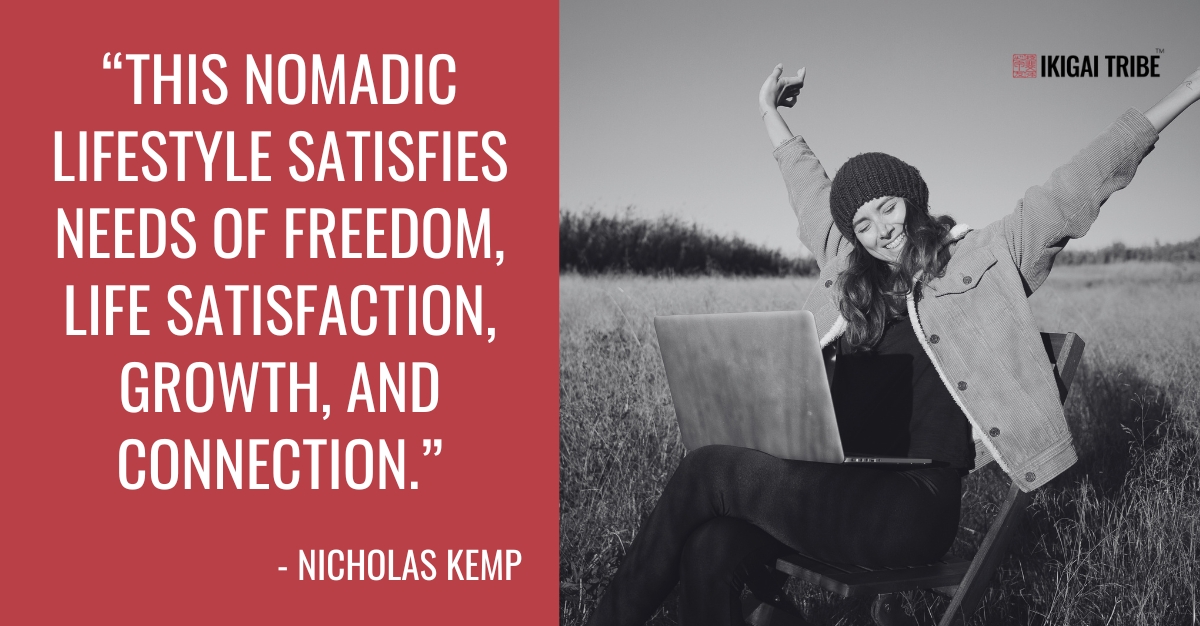
“This nomadic lifestyle satisfies needs of freedom, life satisfaction, growth, and connection.” - Nicholas Kemp
Yet even in that freedom, Kiki noticed something missing. Constant travel brought excitement, but it also made deep, lasting connections difficult. She began longing for ibasho—a place where she truly belonged. While the nomadic life fed her sense of adventure and ikigai, it lacked the depth and rootedness she eventually realized she needed.The day everything changed
In February 2023, while snowboarding in Nagano, Japan, Kiki suffered a near-death accident. What seemed like a normal run turned catastrophic when she slipped and collided face-first with a tree.
The damage was severe. Her entire skull was fractured; nose, jaw, cheekbones, eye sockets, forehead, and her brain was bleeding. Emergency surgery saved her life. Multiple reconstructive surgeries followed, including a 14-hour operation in which surgeons rebuilt her face using metal plates and screws.
Today, more than ten metal plates and over forty screws remain inside her face.
Gratitude before fear
“I have the physical pain right now, but I decided to turn this pain into a gift.” - Kiki Fukai
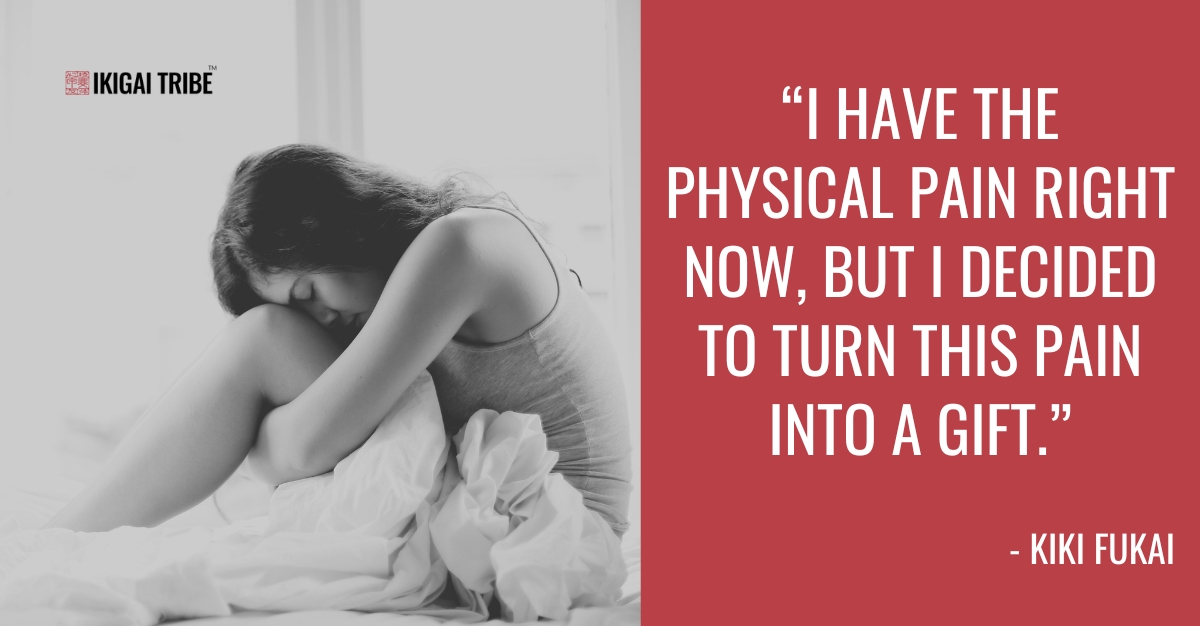
When Kiki woke up in the hospital, her first emotion wasn’t fear, it was gratitude. She could see. She could move her arms and legs. She was alive.
Only later did the reality set in: months of hospitalization, multiple surgeries, and an uncertain future. As someone whose career once involved beauty pageants and fitness modeling, facing a broken face was devastating. She avoided mirrors. She couldn’t smile. She couldn’t even open her mouth to eat.
Yet even in the darkest moments, Kiki made a choice: she would not live as a victim.
Rehabilitation and rebirth
Recovery was slow and painful. Jaw rehabilitation meant gradually forcing her mouth open using thin wooden sticks. Eating, smiling, and even basic facial movement had to be relearned.
Kiki calls the accident her second birth. She survived without paralysis or lasting disability, which she sees as nothing short of miraculous. The accident removed illusions, replaced hesitation with urgency, and made living authentically essential.
Choosing an authentic life
After the accident, Kiki reevaluated everything, especially relationships. Though her marriage was loving and supportive, she and her husband realized their values no longer aligned. Rather than waste time living a life that wasn’t fully true, they chose to part with gratitude instead of resentment.
This decision embodied one of her core beliefs: life is too fragile to live for anyone else’s expectations.
Kintsugi: becoming stronger through breaking
Kiki’s story mirrors the Japanese philosophy of kintsugi. Her bones were broken, repaired with metal instead of gold, but the meaning is the same. She emerged stronger—physically, emotionally, and spiritually.
“I wanted to use this experience to become more authentic, more beautiful, and stronger.” - Kiki Fukai
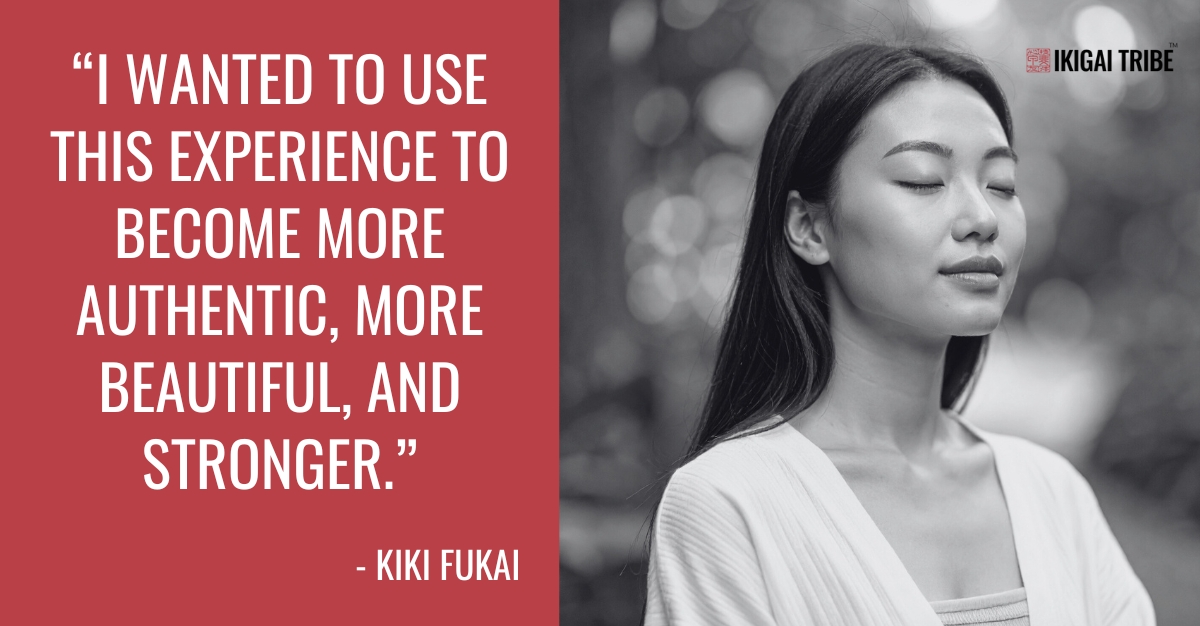
She chose to see pain not as something to fight, but something to accept. Acceptance, in Japanese philosophy, isn’t weakness, it’s freedom. Once pain is accepted, it can be transformed.
Her ongoing physical pain now serves as a reminder: life is precious, and being alive is enough.
From survival to purpose
Today, Kiki is a life coach helping others turn pain into purpose. Her coaching focuses on transforming emotional wounds—breakups, sensitivity, self-doubt—into strengths. As a highly sensitive person, she once saw her emotional intensity as a burden. Now, it allows her to deeply understand and support her clients.
Her work blends coaching with Japanese philosophies like ikigai, ibasho, acceptance (arugamama), and kotodama, the belief that words carry spirit and power.Conclusion
Kiki Fukai lives as a walking embodiment of kintsugi. Her life is not perfect, painless, or untouched, but it is intentional, meaningful, and deeply alive. Her story reminds us that brokenness does not end a life. Sometimes, it is exactly where life truly begins.